Client Logo

Our Solutions

Concrete Polishing

Concrete Floor Repair

Odus Flooring

Epoxy Flooring

Epoxy Repair

Terrazo Flooring

Mosaic Flooring

Use Cases

Concrete Floor Repairing

Warehouse Flooring

Plant Flooring

Hyperstore Flooring

Case Studies

Procter & Gamble

Reliance Industries

Hershey’s India

LG

L&T Constructions

Careers

Internships

Jobs

Resources

Blogs

Team Diaries

Purpose and Passion

Our Story

The Drafting Table

Products

Alkali Resistant Flooring

Odus Dust Block

Terrazzo Flooring

Concrete Polishing Chemicals

Colored Concrete

Fast Curing Additives

Our Solutions
Concrete Polishing

Concrete Floor Repair

Odus Flooring

Epoxy Flooring

Epoxy Repair

Terrazo Flooring

Mosaic Flooring

Use Cases
Concrete Floor Repairing

Warehouse Flooring

Plant Flooring

Hyperstore Flooring

Case Studies
Procter & Gamble

Reliance Industries

Hershey’s India

LG

L&T Constructions

Careers
Internships

Jobs

Resources
Blogs

Team Diaries

Purpose and Passion

Our Story

The Drafting Table

Products
Alkali Resistant Flooring

Odus Dust Block

Terrazzo Flooring

Concrete Polishing Chemicals

Colored Concrete

Fast Curing Additives

Why concrete potholes keep coming? And how to stop them?

Jul 27 • 4 min read

blog_cover

“We did some patch work on concrete but it always comes off” - This is the most common problem statement that we keep hearing.

It is even more prominent in factories and warehouses - due to high frequency of movements.

Factory managers experiment with a wide range of materials like - Plain Concrete, GP2 cement, Epoxy based fillers, some even used bitumen.

However, nothing seems to work!

There is also confusion on - “we filled all potholes with the same material - some of them are still intact but some have come off”.

Hope this article would answer all such confusions on pothole repair.

The general notion is that the filler material is solely responsible for longevity of pothole repair.

That is just not true!

Below are five major reasons that lead to failing of repairs and how to deal with them to get long lasting results.

Reason # 1: Shape of the Pothole

undefined

In the above image, you can see the cross section of a concrete pothole.

#1 is a potholes with smooth and flat edges. It is not able to retain the filler material. Whereas, #2 is a pothole with sharp “v” shaped edges. It retains the filler materials strongly.

Due to the flat and smooth edges in #1 - the filler material tends to erode from the edges. In the process, the pothole not just loses its filling material but also becomes wider.

We need to re-shape the edges with chisel and hammer to get the desired shape. Do not worry if in the process of reshaping it becomes deeper - its not a problem.

Reason # 2: Level of Filling

The general practice is to fill the potholes - exactly to the ground level. At first this appears to be the most logical thing to do. However, we forget about one small phenomena - “shrinkage”

undefined

If we fill just at ground level, it will shrink and sink below ground level by a few millimeters, leaving a shallow crater on the floor that may not be visible to the naked eye.

This crater creates an uneven surface for ground operations. For instance, forklifts moving over this surface will encounter bumps, leading to potential future damage.

However, if we fill above ground level, even if it remains elevated after drying, It can be levelled right to the ground level by grinding.

Reason # 3: Inadequate surface preparation

No matter how good the filler material is, if there is loose material at its base, it will never work!

Assuming that reshaping of edges is already done, please follow these steps for surface preparation:

Step 1: Cleaning

Remove all loose material from the pothole. Also, check if there is a weak surface on the pothole floor. If yes, then break it and remove all material (don't worry about the pothole becoming deeper). Reshape the edges if needed after this step.

Clean the pothole thoroughly.

Step 2: Drying

The pothole should not be wet while filling. Water dilutes the filling material and also creates a false volume for the filling material.

Step 3: Coating with a bonding agent

If filling with concrete-based filler, apply a very thin layer of an old-to-new bonding agent with a brush on the pothole surface. Remember, it should be a thin layer and not a puddle of the bonding agent. Nito bond works well as an old-to-new bonding agent.

Reason # 4: No bonding of Old and New Concrete

undefined

Concrete is very much like humans - the new generation doesn't bond well with the old generation. Thus, if concrete is directly poured on the potholes - it will surely come off in some time.

The solution?

Old to new concrete bonding agents. These chemicals bond well with both - old and new concrete. Thus helps to keep them together. We at Rezovate, generally use Nito Bond for this purpose and it has never disappointed us.

Reason # 5: Incorrect combination of Width - Depth - Filler material

Even though deep potholes look scary but they are easiest to fill. The shallow potholes - though look harmless, but are not able to retain the filler material.

But by deciding the correct filler material as per width and depth of the pothole - we can achieve a long term solution for both.

At Rezovate, we decide on the filler materials as per the depth and width of the pothole. Here are a few examples:

  • Epoxy based fillers for very shallow potholes (< 2 mm)

  • Cement mixed with Nito bond for potholes that are 2- 5 mm deep

  • Mixture of Cement, Sand and Nito bond for 5-10 mm deep

  • Mixture of Cement, Sand, 10mm aggregate, PP Fiber and Nito Bond for 10-15 mm deep

  • Micro-concrete with PP fiber for depth > 15 mm

  • If the width of a pothole is > 30 inches then we also use reinforcement (either PP mesh or thin GFRP bars depending on the size)

Concrete repair can be tricky, but if done right, then it gives long lasting results. Hope this article helped you in understanding the process. Even now if there is a difficult floor situation, please write to us with its pictures and dimensions at info@rezovate.com. Our experts would be happy to help.

Our Clients

Hershey's
L&T Construction
LG
P&G
Yanjan
Eicher
Reliance
Icon

India's Best Industrial and Commercial Flooring Solution Provider

Trusted by 200+ clients. We provide flooring services and supply products for all sorts of Industrial flooring. Call us at +917869964996 or share contact details by filling the form below:

Related Blogs

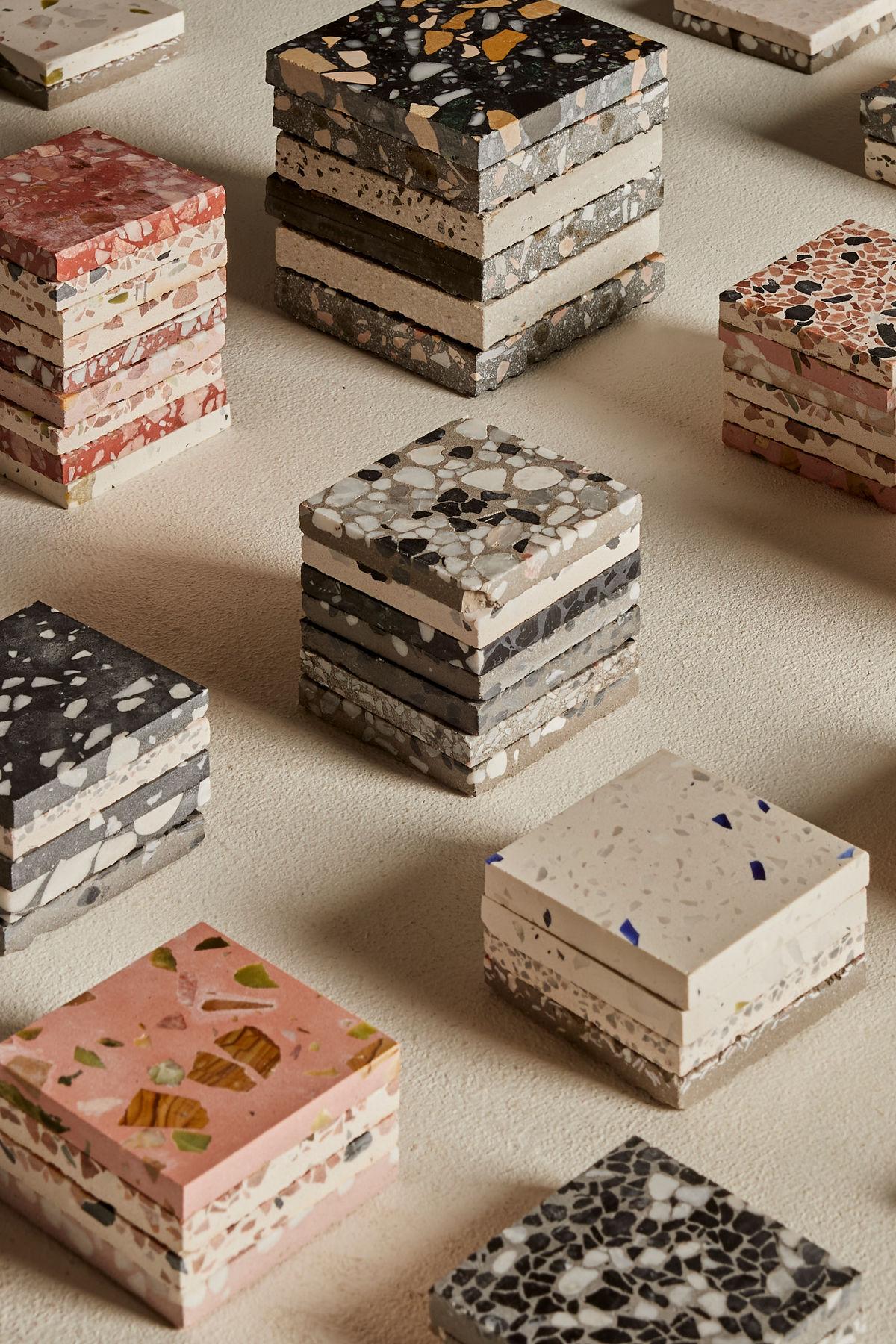
Elements of Construction: Terrazzo

Elements of Construction: Terrazzo

Terrazzo began as a practical solution—an inventive way to reuse stone fragments—and evolved into one of architecture’s most enduring finishes. From ancient pavements to Venetian craftsmanship and modern public landmarks, terrazzo’s story is one of sustainability, durability, and timeless design.

Dec 16,2025

2 min

Elements of Construction: Duct Tape

Elements of Construction: Duct Tape

Duct tape wasn’t meant to be iconic. It was meant to solve a problem. Born out of necessity during wartime, it quietly went on to become one of the most relied-upon materials on construction sites everywhere, proof that the simplest ideas often leave the biggest impact.

Dec 16,2025

2 min

Elements of Construction: Teflon

Elements of Construction: Teflon

Teflon was never meant for buildings. Discovered by accident while searching for a safer refrigerant gas, its refusal to react with almost anything turned it into one of construction’s underrated materials—protecting structures from corrosion, heat and damage.

Jan 21,2026

2 min

Why is India a Hotspot for Global Investors?

Why is India a Hotspot for Global Investors?

India ranks 5th globally, with 6.8% GDP growth, vast market, young population, UPI leadership, reforms, and 100% FDI in most sectors—making it a prime investment hotspot.

Feb 25,2026

8 min

Elements of Construction: Paints

Elements of Construction: Paints

Historically, wall colors from natural pigments like ultramarine (from lapis lazuli), lead white, mercury vermilion, and arsenic green were luxurious but highly toxic, involving dangerous mining, trade, and application that poisoned artisans. Paint was a labor-intensive process driven by experience, not safety. The Industrial Revolution brought synthetic pigments, making paint safe, scalable, and functional—protecting buildings from corrosion, fire, and weathering. Modern architecture benefits from engineered coatings, but today's safe colors echo a violent past of risk and human sacrifice.

Jan 06,2026

2 min

Elements of Construction: Plywood

Elements of Construction: Plywood

Plywood may seem like a modern construction staple, but its origins stretch back thousands of years. What began as an ancient technique of layering veneers for stability evolved through industrial innovation into a lightweight, high-strength material. Its true breakthrough came during World War I, where its speed, durability, and strength-to-weight ratio made it indispensable for aircraft and rapid construction—cementing plywood’s place as a foundational material of modern building.

Dec 16,2025

2 min

Elements of Construction: Terrazzo

Elements of Construction: Terrazzo

Terrazzo began as a practical solution—an inventive way to reuse stone fragments—and evolved into one of architecture’s most enduring finishes. From ancient pavements to Venetian craftsmanship and modern public landmarks, terrazzo’s story is one of sustainability, durability, and timeless design.

Dec 16,2025

2 min

Elements of Construction: Duct Tape

Elements of Construction: Duct Tape

Duct tape wasn’t meant to be iconic. It was meant to solve a problem. Born out of necessity during wartime, it quietly went on to become one of the most relied-upon materials on construction sites everywhere, proof that the simplest ideas often leave the biggest impact.

Dec 16,2025

2 min

Elements of Construction: Teflon

Elements of Construction: Teflon

Teflon was never meant for buildings. Discovered by accident while searching for a safer refrigerant gas, its refusal to react with almost anything turned it into one of construction’s underrated materials—protecting structures from corrosion, heat and damage.

Jan 21,2026

2 min

Why is India a Hotspot for Global Investors?

Why is India a Hotspot for Global Investors?

India ranks 5th globally, with 6.8% GDP growth, vast market, young population, UPI leadership, reforms, and 100% FDI in most sectors—making it a prime investment hotspot.

Feb 25,2026

8 min

Elements of Construction: Paints

Elements of Construction: Paints

Historically, wall colors from natural pigments like ultramarine (from lapis lazuli), lead white, mercury vermilion, and arsenic green were luxurious but highly toxic, involving dangerous mining, trade, and application that poisoned artisans. Paint was a labor-intensive process driven by experience, not safety. The Industrial Revolution brought synthetic pigments, making paint safe, scalable, and functional—protecting buildings from corrosion, fire, and weathering. Modern architecture benefits from engineered coatings, but today's safe colors echo a violent past of risk and human sacrifice.

Jan 06,2026

2 min

Elements of Construction: Plywood

Elements of Construction: Plywood

Plywood may seem like a modern construction staple, but its origins stretch back thousands of years. What began as an ancient technique of layering veneers for stability evolved through industrial innovation into a lightweight, high-strength material. Its true breakthrough came during World War I, where its speed, durability, and strength-to-weight ratio made it indispensable for aircraft and rapid construction—cementing plywood’s place as a foundational material of modern building.

Dec 16,2025

2 min

Elements of Construction: Terrazzo

Elements of Construction: Terrazzo

Terrazzo began as a practical solution—an inventive way to reuse stone fragments—and evolved into one of architecture’s most enduring finishes. From ancient pavements to Venetian craftsmanship and modern public landmarks, terrazzo’s story is one of sustainability, durability, and timeless design.

Dec 16,2025

2 min

Elements of Construction: Duct Tape

Elements of Construction: Duct Tape

Duct tape wasn’t meant to be iconic. It was meant to solve a problem. Born out of necessity during wartime, it quietly went on to become one of the most relied-upon materials on construction sites everywhere, proof that the simplest ideas often leave the biggest impact.

Dec 16,2025

2 min

Elements of Construction: Teflon

Elements of Construction: Teflon

Teflon was never meant for buildings. Discovered by accident while searching for a safer refrigerant gas, its refusal to react with almost anything turned it into one of construction’s underrated materials—protecting structures from corrosion, heat and damage.

Jan 21,2026

2 min