Client Logo

Our Solutions

Concrete Polishing

Concrete Floor Repair

Odus Flooring

Epoxy Flooring

Epoxy Repair

Terrazo Flooring

Mosaic Flooring

Use Cases

Concrete Floor Repairing

Warehouse Flooring

Plant Flooring

Hyperstore Flooring

Case Studies

Procter & Gamble

Reliance Industries

Hershey’s India

LG

L&T Constructions

Careers

Internships

Jobs

Resources

Blogs

Team Diaries

Purpose and Passion

Our Story

The Drafting Table

Products

Alkali Resistant Flooring

Odus Dust Block

Terrazzo Flooring

Concrete Polishing Chemicals

Colored Concrete

Fast Curing Additives

Our Solutions
Concrete Polishing

Concrete Floor Repair

Odus Flooring

Epoxy Flooring

Epoxy Repair

Terrazo Flooring

Mosaic Flooring

Use Cases
Concrete Floor Repairing

Warehouse Flooring

Plant Flooring

Hyperstore Flooring

Case Studies
Procter & Gamble

Reliance Industries

Hershey’s India

LG

L&T Constructions

Careers
Internships

Jobs

Resources
Blogs

Team Diaries

Purpose and Passion

Our Story

The Drafting Table

Products
Alkali Resistant Flooring

Odus Dust Block

Terrazzo Flooring

Concrete Polishing Chemicals

Colored Concrete

Fast Curing Additives

What is ISO? Importance, Standards, and Certification Process

Apr 23 • 5 min read

blog_cover

The International Organization for Standardization (ISO) develops globally recognized standards to ensure quality, safety, and efficiency across industries. This guide explains ISO’s role, key standards, benefits, and the step-by-step process for achieving ISO certification.

What is ISO?

Origin and Meaning

The term "ISO" derives from the Greek word isos, meaning "equal," symbolizing standardization. It is not an acronym but a name reflecting the organization’s mission to promote uniformity.

History and Establishment

Founded in 1947, ISO is an independent, non-governmental organization based in Geneva, Switzerland, operating under Swiss law. With 170 member countries (129 full members, plus correspondent and subscriber members), ISO fosters international collaboration to develop standards.

Scope and Global Reach

ISO has published over 25,000 standards covering industries like manufacturing, healthcare, food safety, and environmental management. It does not cover electronics, electrics, or telecommunications, which are handled by the International Electrotechnical Commission (IEC) and International Telecommunication Union (ITU).

Membership and Collaboration

ISO’s members include national standards bodies, such as the Bureau of Indian Standards (BIS) for India, a founding member with voting rights. ISO collaborates with IEC and ITU through the World Standards Cooperation (WSC) to ensure cohesive global standardization.

Why Are ISO Standards Important?

ISO standards promote consistency, safety, and efficiency worldwide. They benefit organizations and society by:

  • Enhancing Quality: Ensuring products and services meet consistent standards.

  • Boosting Customer Confidence: Certified organizations demonstrate reliability.

  • Reducing Risks: Standards like ISO 27001 (information security) mitigate threats.

  • Promoting Sustainability: ISO 14001 encourages environmental responsibility.

  • Facilitating Trade: Harmonized standards simplify cross-border commerce.

Key Areas of ISO Standards

ISO standards span diverse fields, including:

  • Quality management (e.g., ISO 9001)

  • Environmental management (e.g., ISO 14001)

  • Occupational health and safety (e.g., ISO 45001)

  • Information security (e.g., ISO 27001)

  • Energy management (e.g., ISO 50001)

  • Food safety

  • Cybersecurity and AI

  • Circular economy

Popular ISO Standards

Some widely adopted ISO standards include:

  • ISO 9001: Quality management systems

  • ISO 14001: Environmental management

  • ISO 27001: Information security management

  • ISO 45001: Occupational health and safety

  • ISO 50001: Energy management

  • ISO 31000: Risk management

  • ISO 8601: Date and time formats

  • ISO 26000: Guidance on social responsibility (non-certifiable)

How Are ISO Standards Developed?

ISO standards are created through a rigorous six-stage process:

  1. Proposal Stage: A new work item is proposed and evaluated by ISO committees.

  2. Preparatory Stage: Expert working groups draft the standard.

  3. Committee Stage: National representatives refine the draft.

  4. Enquiry Stage: The Draft International Standard (DIS) is circulated for voting and comments. Approval requires at least 75% support.

  5. Approval Stage: The Final Draft International Standard (FDIS) is voted on, needing a two-thirds majority.

  6. Publication Stage: The approved standard is published.

Standards are reviewed every five years and updated or withdrawn as needed to remain relevant.

ISO Certification Process: Step-by-Step Guide

ISO certification verifies that an organization complies with a specific ISO standard. Certification is conducted by accredited third-party bodies, not ISO itself. Below is the process for standards like ISO 9001 or ISO 14001.

Step 1: Understand the ISO Standard

  • Objective: Learn the standard’s requirements.

  • Actions:

    • Obtain the standard from ISO or an authorized distributor.

    • Study its clauses and objectives.

    • Align the standard with your organization’s goals.

    • Pro Tip: Train key staff through workshops.

Step 2: Conduct a Gap Analysis

  • Objective: Identify gaps between current practices and the standard.

  • Actions:

    • Perform an internal audit.

    • Document non-conformities (e.g., missing policies).

    • Consider hiring a consultant for objectivity.

  • Output: Gap analysis report.

Step 3: Develop an Implementation Plan

  • Objective: Create a compliance roadmap.

  • Actions:

    • Assign a project team or management representative.

    • Set milestones for process development and audits.

    • Allocate resources (budget, tools).

    • Pro Tip: Use project management software.

Step 4: Design and Document Processes

  • Objective: Establish compliant processes.

  • Actions:

    • Update policies and procedures.

    • Create required documentation (e.g., quality manual for ISO 9001).

    • Maintain records for audits and training.

    • Pro Tip: Ensure documentation is clear and accessible.

Step 5: Implement the System

  • Objective: Apply processes in daily operations.

  • Actions:

    • Train employees in procedures.

    • Communicate compliance importance.

    • Test critical processes.

    • Pro Tip: Pilot test to identify issues.

Step 6: Conduct Internal Audits

  • Objective: Verify system effectiveness.

  • Actions:

    • Train or hire auditors.

    • Audit adherence to the standard.

    • Document findings and corrective actions.

  • Output: Internal audit report.

Step 7: Management Review

  • Objective: Engage top management.

  • Actions:

    • Review audit results and performance metrics.

    • Approve corrective actions.

    • Update the plan as needed.

    • Pro Tip: Keep meeting minutes for evidence.

Step 8: Select a Certification Body

  • Objective: Choose an accredited registrar.

  • Actions:

    • Research bodies accredited by UKAS, ANAB, or similar.

    • Compare quotes and industry expertise.

    • Schedule the audit.

    • Pro Tip: Verify accreditation.

Step 9: Stage 1 Audit (Documentation Review)

  • Objective: Confirm documentation compliance.

  • Actions:

    • Submit documents to the auditor.

    • Address minor non-conformities.

    • Prepare for Stage 2.

  • Output: Stage 1 audit report.

Step 10: Stage 2 Audit (Implementation Review)

  • Objective: Verify process implementation.

  • Actions:

    • Host auditors for site visits and interviews.

    • Correct minor issues during the audit.

    • Address major non-conformities post-audit.

  • Output: Final audit report.

Step 11: Achieve Certification

  • Objective: Obtain and maintain certification.

  • Actions:

    • Receive the certificate (valid for 3 years).

    • Use the ISO logo per guidelines.

    • Plan for surveillance audits (typically annual).

    • Pro Tip: Communicate success to stakeholders.

Step 12: Continuous Improvement

  • Objective: Sustain and enhance compliance.

  • Actions:

    • Monitor KPIs and process performance.

    • Conduct regular audits and reviews.

    • Implement corrective actions.

    • Pro Tip: Stay updated on standard revisions.

Certification Notes

  • Timeline: 3–12 months, depending on organization size and readiness.

  • Costs: Vary based on company size, industry, and certification body fees.

  • Terminology: ISO recommends specifying the standard (e.g., “ISO 9001 compliant”) rather than “ISO-certified.”

Benefits of ISO Certification

  • Reputation: Demonstrates adherence to global standards.

  • Customer Trust: Enhances confidence in products/services.

  • Efficiency: Streamlines processes and reduces waste.

  • Market Access: Facilitates international trade.

  • Compliance: Aligns with regulatory requirements.

ISO Certificate Validity and Renewal

  • Validity: Typically, 3 years, with annual surveillance audits for standards like ISO 9001.

  • Renewal: Requires a recertification audit, which may take several months depending on system complexity.

Conclusion

ISO standards drive quality, safety, and sustainability worldwide. By achieving ISO certification, organizations demonstrate professionalism, improve processes, and gain a competitive edge. For more information, visit ISO’s official website.

Our Clients

Hershey's
L&T Construction
LG
P&G
Yanjan
Eicher
Reliance
Icon

India's Best Industrial and Commercial Flooring Solution Provider

Trusted by 200+ clients. We provide flooring services and supply products for all sorts of Industrial flooring. Call us at +917869964996 or share contact details by filling the form below:

Related Blogs

Elements of Construction: Terrazzo

Elements of Construction: Terrazzo

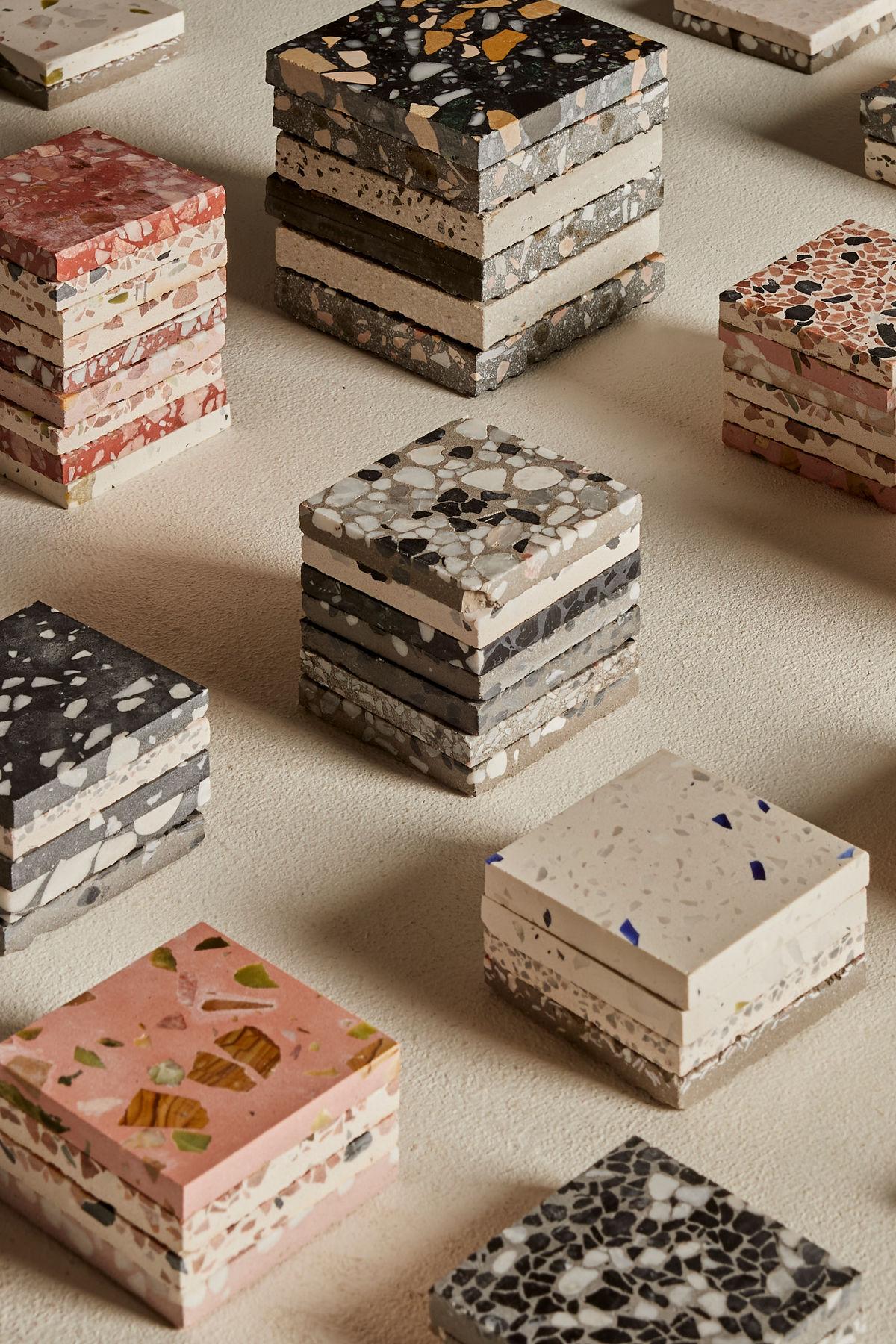
Terrazzo began as a practical solution—an inventive way to reuse stone fragments—and evolved into one of architecture’s most enduring finishes. From ancient pavements to Venetian craftsmanship and modern public landmarks, terrazzo’s story is one of sustainability, durability, and timeless design.

Dec 16,2025

2 min

Elements of Construction: Duct Tape

Elements of Construction: Duct Tape

Duct tape wasn’t meant to be iconic. It was meant to solve a problem. Born out of necessity during wartime, it quietly went on to become one of the most relied-upon materials on construction sites everywhere, proof that the simplest ideas often leave the biggest impact.

Dec 16,2025

2 min

Elements of Construction: Teflon

Elements of Construction: Teflon

Teflon was never meant for buildings. Discovered by accident while searching for a safer refrigerant gas, its refusal to react with almost anything turned it into one of construction’s underrated materials—protecting structures from corrosion, heat and damage.

Jan 21,2026

2 min

Why is India a Hotspot for Global Investors?

Why is India a Hotspot for Global Investors?

India ranks 5th globally, with 6.8% GDP growth, vast market, young population, UPI leadership, reforms, and 100% FDI in most sectors—making it a prime investment hotspot.

Feb 25,2026

8 min

Elements of Construction: Paints

Elements of Construction: Paints

Historically, wall colors from natural pigments like ultramarine (from lapis lazuli), lead white, mercury vermilion, and arsenic green were luxurious but highly toxic, involving dangerous mining, trade, and application that poisoned artisans. Paint was a labor-intensive process driven by experience, not safety. The Industrial Revolution brought synthetic pigments, making paint safe, scalable, and functional—protecting buildings from corrosion, fire, and weathering. Modern architecture benefits from engineered coatings, but today's safe colors echo a violent past of risk and human sacrifice.

Jan 06,2026

2 min

Elements of Construction: Plywood

Elements of Construction: Plywood

Plywood may seem like a modern construction staple, but its origins stretch back thousands of years. What began as an ancient technique of layering veneers for stability evolved through industrial innovation into a lightweight, high-strength material. Its true breakthrough came during World War I, where its speed, durability, and strength-to-weight ratio made it indispensable for aircraft and rapid construction—cementing plywood’s place as a foundational material of modern building.

Dec 16,2025

2 min

Elements of Construction: Terrazzo

Elements of Construction: Terrazzo

Terrazzo began as a practical solution—an inventive way to reuse stone fragments—and evolved into one of architecture’s most enduring finishes. From ancient pavements to Venetian craftsmanship and modern public landmarks, terrazzo’s story is one of sustainability, durability, and timeless design.

Dec 16,2025

2 min

Elements of Construction: Duct Tape

Elements of Construction: Duct Tape

Duct tape wasn’t meant to be iconic. It was meant to solve a problem. Born out of necessity during wartime, it quietly went on to become one of the most relied-upon materials on construction sites everywhere, proof that the simplest ideas often leave the biggest impact.

Dec 16,2025

2 min

Elements of Construction: Teflon

Elements of Construction: Teflon

Teflon was never meant for buildings. Discovered by accident while searching for a safer refrigerant gas, its refusal to react with almost anything turned it into one of construction’s underrated materials—protecting structures from corrosion, heat and damage.

Jan 21,2026

2 min

Why is India a Hotspot for Global Investors?

Why is India a Hotspot for Global Investors?

India ranks 5th globally, with 6.8% GDP growth, vast market, young population, UPI leadership, reforms, and 100% FDI in most sectors—making it a prime investment hotspot.

Feb 25,2026

8 min

Elements of Construction: Paints

Elements of Construction: Paints

Historically, wall colors from natural pigments like ultramarine (from lapis lazuli), lead white, mercury vermilion, and arsenic green were luxurious but highly toxic, involving dangerous mining, trade, and application that poisoned artisans. Paint was a labor-intensive process driven by experience, not safety. The Industrial Revolution brought synthetic pigments, making paint safe, scalable, and functional—protecting buildings from corrosion, fire, and weathering. Modern architecture benefits from engineered coatings, but today's safe colors echo a violent past of risk and human sacrifice.

Jan 06,2026

2 min

Elements of Construction: Plywood

Elements of Construction: Plywood

Plywood may seem like a modern construction staple, but its origins stretch back thousands of years. What began as an ancient technique of layering veneers for stability evolved through industrial innovation into a lightweight, high-strength material. Its true breakthrough came during World War I, where its speed, durability, and strength-to-weight ratio made it indispensable for aircraft and rapid construction—cementing plywood’s place as a foundational material of modern building.

Dec 16,2025

2 min

Elements of Construction: Terrazzo

Elements of Construction: Terrazzo

Terrazzo began as a practical solution—an inventive way to reuse stone fragments—and evolved into one of architecture’s most enduring finishes. From ancient pavements to Venetian craftsmanship and modern public landmarks, terrazzo’s story is one of sustainability, durability, and timeless design.

Dec 16,2025

2 min

Elements of Construction: Duct Tape

Elements of Construction: Duct Tape

Duct tape wasn’t meant to be iconic. It was meant to solve a problem. Born out of necessity during wartime, it quietly went on to become one of the most relied-upon materials on construction sites everywhere, proof that the simplest ideas often leave the biggest impact.

Dec 16,2025

2 min

Elements of Construction: Teflon

Elements of Construction: Teflon

Teflon was never meant for buildings. Discovered by accident while searching for a safer refrigerant gas, its refusal to react with almost anything turned it into one of construction’s underrated materials—protecting structures from corrosion, heat and damage.

Jan 21,2026

2 min