Client Logo

Our Solutions

Concrete Polishing

Concrete Floor Repair

Odus Flooring

Epoxy Flooring

Epoxy Repair

Terrazo Flooring

Mosaic Flooring

Use Cases

Concrete Floor Repairing

Warehouse Flooring

Plant Flooring

Hyperstore Flooring

Case Studies

Procter & Gamble

Reliance Industries

Hershey’s India

LG

L&T Constructions

Careers

Internships

Jobs

Resources

Blogs

Team Diaries

Purpose and Passion

Our Story

The Drafting Table

Products

Alkali Resistant Flooring

Odus Dust Block

Terrazzo Flooring

Concrete Polishing Chemicals

Colored Concrete

Fast Curing Additives

Our Solutions
Concrete Polishing

Concrete Floor Repair

Odus Flooring

Epoxy Flooring

Epoxy Repair

Terrazo Flooring

Mosaic Flooring

Use Cases
Concrete Floor Repairing

Warehouse Flooring

Plant Flooring

Hyperstore Flooring

Case Studies
Procter & Gamble

Reliance Industries

Hershey’s India

LG

L&T Constructions

Careers
Internships

Jobs

Resources
Blogs

Team Diaries

Purpose and Passion

Our Story

The Drafting Table

Products
Alkali Resistant Flooring

Odus Dust Block

Terrazzo Flooring

Concrete Polishing Chemicals

Colored Concrete

Fast Curing Additives

Types of Damages on Epoxy Flooring- And what do they indicate?

Jul 27 • 4 min read

blog_cover

Do you often get surprised by sudden Bubbles or Pinholes on Epoxy Floor?

Or you are tired of Epoxy peeling off the base surface?

These are common phenomena in Epoxy, and each of them tells us a story. Just by looking at the kind of damage on Epoxy Floor, one can tell “what went wrong?”.

This conclusion would help in preventing any such problems in the future.

Here is a guide to help you understand the background story of Epoxy damage.

Blistering: Pinholes, Bubbles, Craters

Blistering can emerge on Epoxy Floors as – Pinholes, Bubbles, and Craters on Epoxy Surface.

At first they might seem to be harmless, but they actually act as the starting point for more severe damage on the Floor.

Blistering usually occurs when air/ gas gets trapped by the resin layer. If it remains trapped – it emerges as bubbles. If they escape later – it emerges as pinholes and craters.

What does it indicate?

If Epoxy floor in your premises has been Blistering, it would be due to one or more of the following reasons:

The Resin and Hardener were not mixed in the correct proportions:

The ratio in which the two components of Epoxy should be mixed varies from product to product. They should always be mixed as per the maker’s recommendation. Any deviation from the recommended proportions would result in a low-quality Epoxy.

Epoxy application has been done in a rushed manner. Each layer needs to be given the recommended curing time during application.

Epoxy has been exposed to UV radiation UV rays deteriorate Epoxy by reacting with the polymer. Such Exposure can damage Epoxy during application and weeks after application as well.

Epoxy Floor is exposed to moisture or humidity. Both – surface humidity and atmospheric moisture can act to deteriorate Epoxy. Even if such exposure is weeks after completion of the application, it will still cause Blistering.

Base Floor was too rough. Roughness means the floor is porous. Air or moisture keeps getting released from these pores in concrete. Thus leading to Blistering on Epoxy surface. If the base floor is rough, one can keep getting surprised by regular appearance of Blistering on the surface.

Peeling

Epoxy layer peeling off the floor is a pain for plant managers and facility managers. It gives rise to large patches on the floor surface. These patches get peeled off further in all directions – giving rise to EVEN LARGER PATCHES. In most cases the chain ends at re-application of Epoxy.

The main reason why Epoxy peels of a floor’s surface is because of inadequate binding between the Epoxy layer and the base floor.

It could happen because of one of the following reasons:

Temperature was either too low or too high during application. The optimal temperature range for Epoxy application and maintenance is 20 to 30 degree Celsius. If Epoxy doesn’t get the right conditions while setting, it won’t lay correctly on the concrete floor. Moreover, changes in temperature lead to moisture which loosens the Epoxy-Base Floor bond.

Presence of Moisture or high Humidity. For perfect application and maintenance of Epoxy,

Base Floor should be completely dry

Relative humidity should be less than 65%

In absence of such conditions, Epoxy doesn’t bind well with the base floor and ends up peeling.

The Base floor was too smooth

A perfect-looking smooth concrete floor is also an unfavorable factor for a high-quality Epoxy Floor. Here, resin fails to strongly bind with the concrete floor and ends up peeling off later.

Presence of Oil on Base Surface Oil or any other lubricating material comes between the Epoxy layer and the base concrete floor. It, therefore, acts as an obstruction for Epoxy to adhere properly with the base floor.

The result? Peeling!

Caution: Beware of oil that is absorbed in concrete surface. It can be identified as irregular dark patches. If they are present, the applicator needs to scrape off the top concrete layer before starting the application procedure.

Base floor was not clean during application. Any dust or waste material on the base surface acts as an obstruction for a strongly bonded Epoxy. It needs to be thoroughly cleaned before starting application.

Discoloration

Discoloration in Epoxy looks like uneven colored patches on the floor surface. To check if Epoxy is discolored, scrape off the top most layer of Epoxy by a sharp tool. If the color underneath is different from the surface – it means Epoxy is discolored.

Discoloration of Epoxy can arise from one of the following reasons:

UV Exposure UV rays react with Epoxy to give it a slightly darker shade. This can be easily observed if a part of the Epoxy that is exposed to sun has a different shade.

Application was too slow

If the applicator waits for a long time to lay Epoxy, the solution of Resin and Hardener might exceed its pot life. At this stage, the mixture might also seem to be workable. But if it has exceeded its pot life – it results in low quality Epoxy of low quality.

Our Clients

Hershey's
L&T Construction
LG
P&G
Yanjan
Eicher
Reliance
Icon

India's Best Industrial and Commercial Flooring Solution Provider

Trusted by 200+ clients. We provide flooring services and supply products for all sorts of Industrial flooring. Call us at +917869964996 or share contact details by filling the form below:

Related Blogs

Elements of Construction: Terrazzo

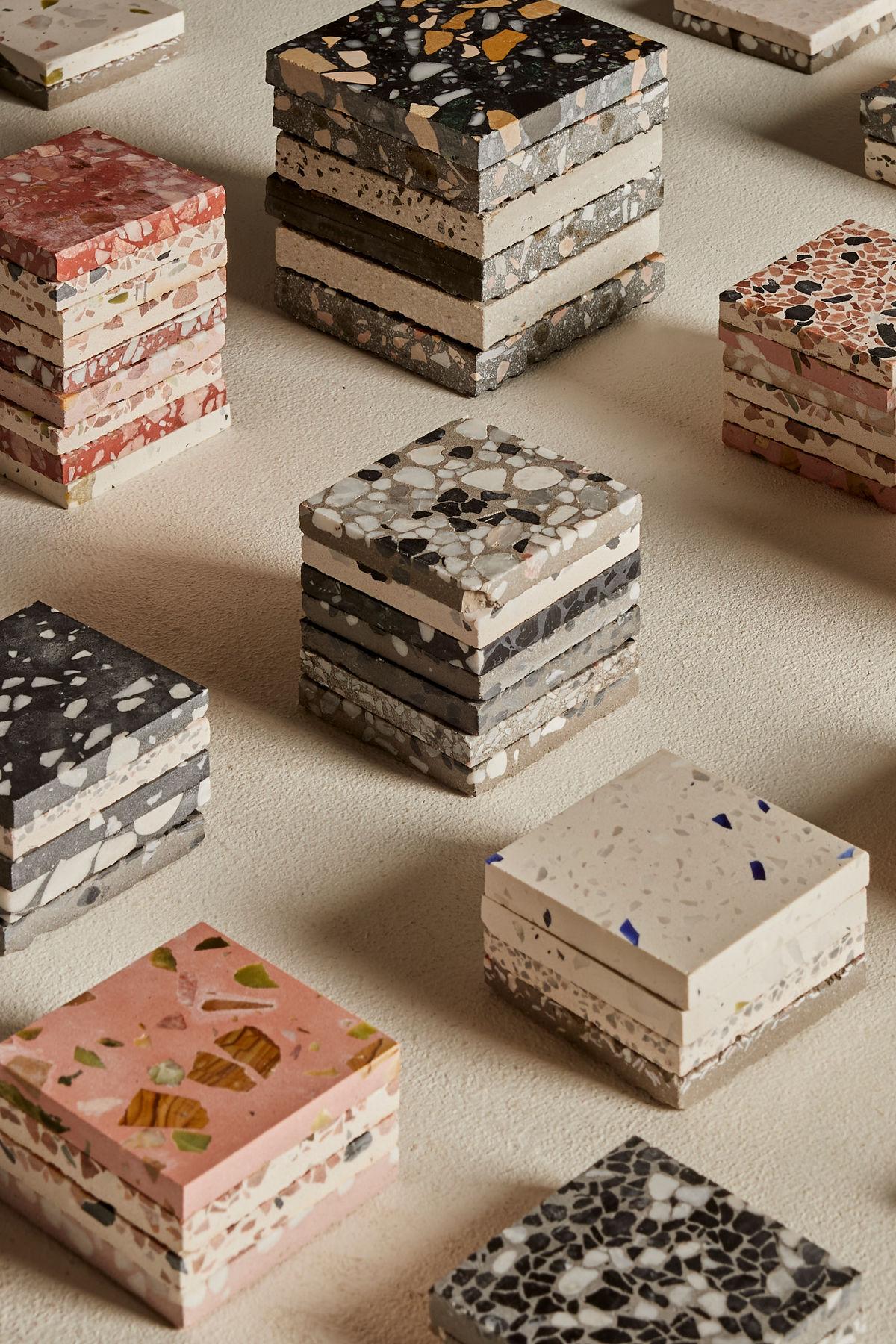
Elements of Construction: Terrazzo

Terrazzo began as a practical solution—an inventive way to reuse stone fragments—and evolved into one of architecture’s most enduring finishes. From ancient pavements to Venetian craftsmanship and modern public landmarks, terrazzo’s story is one of sustainability, durability, and timeless design.

Dec 16,2025

2 min

Elements of Construction: Duct Tape

Elements of Construction: Duct Tape

Duct tape wasn’t meant to be iconic. It was meant to solve a problem. Born out of necessity during wartime, it quietly went on to become one of the most relied-upon materials on construction sites everywhere, proof that the simplest ideas often leave the biggest impact.

Dec 16,2025

2 min

Elements of Construction: Teflon

Elements of Construction: Teflon

Teflon was never meant for buildings. Discovered by accident while searching for a safer refrigerant gas, its refusal to react with almost anything turned it into one of construction’s underrated materials—protecting structures from corrosion, heat and damage.

Jan 21,2026

2 min

Why is India a Hotspot for Global Investors?

Why is India a Hotspot for Global Investors?

India ranks 5th globally, with 6.8% GDP growth, vast market, young population, UPI leadership, reforms, and 100% FDI in most sectors—making it a prime investment hotspot.

Feb 25,2026

8 min

Elements of Construction: Paints

Elements of Construction: Paints

Historically, wall colors from natural pigments like ultramarine (from lapis lazuli), lead white, mercury vermilion, and arsenic green were luxurious but highly toxic, involving dangerous mining, trade, and application that poisoned artisans. Paint was a labor-intensive process driven by experience, not safety. The Industrial Revolution brought synthetic pigments, making paint safe, scalable, and functional—protecting buildings from corrosion, fire, and weathering. Modern architecture benefits from engineered coatings, but today's safe colors echo a violent past of risk and human sacrifice.

Jan 06,2026

2 min

Elements of Construction: Plywood

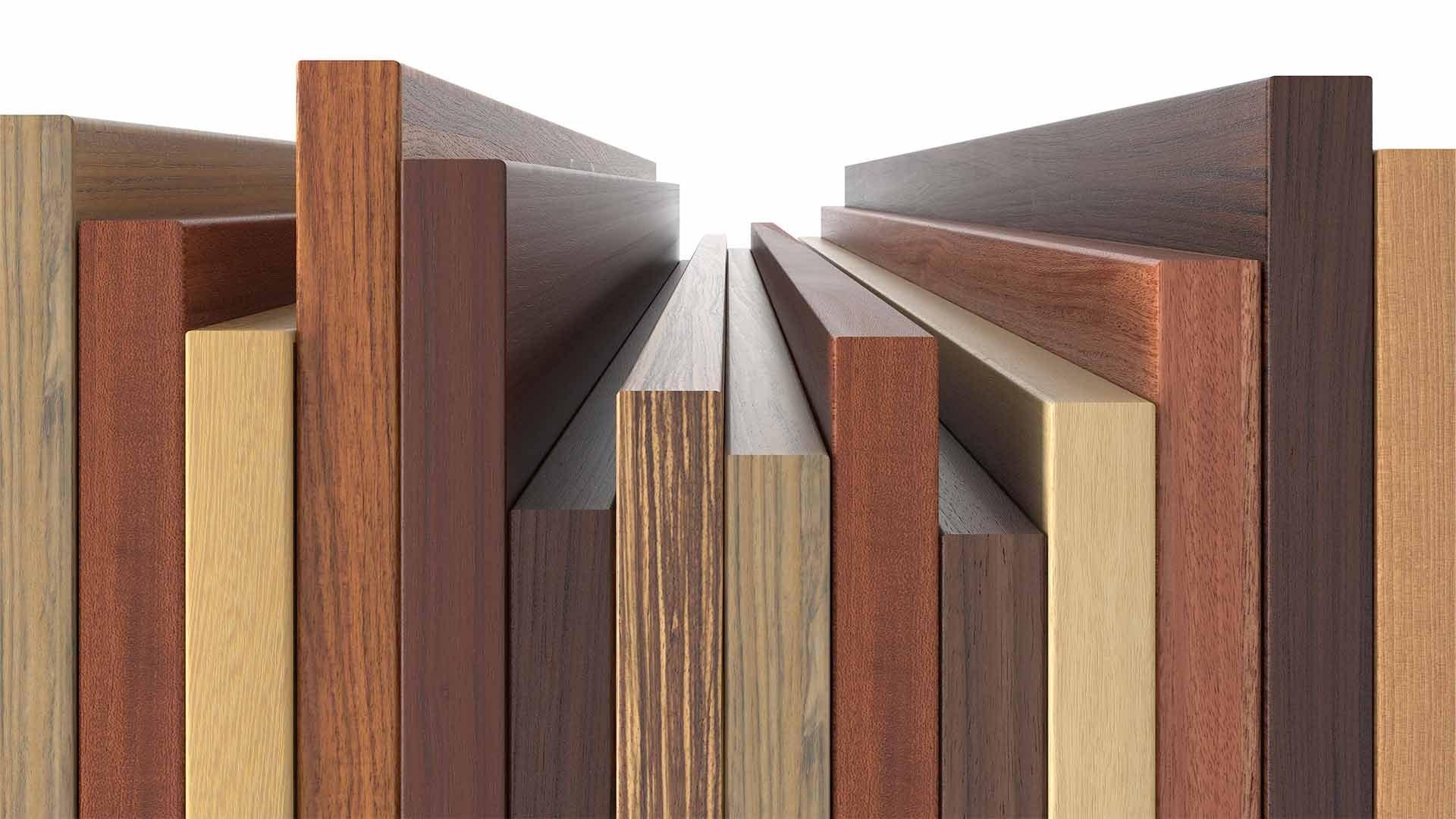
Elements of Construction: Plywood

Plywood may seem like a modern construction staple, but its origins stretch back thousands of years. What began as an ancient technique of layering veneers for stability evolved through industrial innovation into a lightweight, high-strength material. Its true breakthrough came during World War I, where its speed, durability, and strength-to-weight ratio made it indispensable for aircraft and rapid construction—cementing plywood’s place as a foundational material of modern building.

Dec 16,2025

2 min

Elements of Construction: Terrazzo

Elements of Construction: Terrazzo

Terrazzo began as a practical solution—an inventive way to reuse stone fragments—and evolved into one of architecture’s most enduring finishes. From ancient pavements to Venetian craftsmanship and modern public landmarks, terrazzo’s story is one of sustainability, durability, and timeless design.

Dec 16,2025

2 min

Elements of Construction: Duct Tape

Elements of Construction: Duct Tape

Duct tape wasn’t meant to be iconic. It was meant to solve a problem. Born out of necessity during wartime, it quietly went on to become one of the most relied-upon materials on construction sites everywhere, proof that the simplest ideas often leave the biggest impact.

Dec 16,2025

2 min

Elements of Construction: Teflon

Elements of Construction: Teflon

Teflon was never meant for buildings. Discovered by accident while searching for a safer refrigerant gas, its refusal to react with almost anything turned it into one of construction’s underrated materials—protecting structures from corrosion, heat and damage.

Jan 21,2026

2 min

Why is India a Hotspot for Global Investors?

Why is India a Hotspot for Global Investors?

India ranks 5th globally, with 6.8% GDP growth, vast market, young population, UPI leadership, reforms, and 100% FDI in most sectors—making it a prime investment hotspot.

Feb 25,2026

8 min

Elements of Construction: Paints

Elements of Construction: Paints

Historically, wall colors from natural pigments like ultramarine (from lapis lazuli), lead white, mercury vermilion, and arsenic green were luxurious but highly toxic, involving dangerous mining, trade, and application that poisoned artisans. Paint was a labor-intensive process driven by experience, not safety. The Industrial Revolution brought synthetic pigments, making paint safe, scalable, and functional—protecting buildings from corrosion, fire, and weathering. Modern architecture benefits from engineered coatings, but today's safe colors echo a violent past of risk and human sacrifice.

Jan 06,2026

2 min

Elements of Construction: Plywood

Elements of Construction: Plywood

Plywood may seem like a modern construction staple, but its origins stretch back thousands of years. What began as an ancient technique of layering veneers for stability evolved through industrial innovation into a lightweight, high-strength material. Its true breakthrough came during World War I, where its speed, durability, and strength-to-weight ratio made it indispensable for aircraft and rapid construction—cementing plywood’s place as a foundational material of modern building.

Dec 16,2025

2 min

Elements of Construction: Terrazzo

Elements of Construction: Terrazzo

Terrazzo began as a practical solution—an inventive way to reuse stone fragments—and evolved into one of architecture’s most enduring finishes. From ancient pavements to Venetian craftsmanship and modern public landmarks, terrazzo’s story is one of sustainability, durability, and timeless design.

Dec 16,2025

2 min

Elements of Construction: Duct Tape

Elements of Construction: Duct Tape

Duct tape wasn’t meant to be iconic. It was meant to solve a problem. Born out of necessity during wartime, it quietly went on to become one of the most relied-upon materials on construction sites everywhere, proof that the simplest ideas often leave the biggest impact.

Dec 16,2025

2 min

Elements of Construction: Teflon

Elements of Construction: Teflon

Teflon was never meant for buildings. Discovered by accident while searching for a safer refrigerant gas, its refusal to react with almost anything turned it into one of construction’s underrated materials—protecting structures from corrosion, heat and damage.

Jan 21,2026

2 min