Client Logo

Our Solutions

Concrete Polishing

Concrete Floor Repair

Odus Flooring

Epoxy Flooring

Epoxy Repair

Terrazo Flooring

Mosaic Flooring

Use Cases

Concrete Floor Repairing

Warehouse Flooring

Plant Flooring

Hyperstore Flooring

Case Studies

Procter & Gamble

Reliance Industries

Hershey’s India

LG

L&T Constructions

Careers

Internships

Jobs

Resources

Blogs

Team Diaries

Purpose and Passion

Our Story

The Drafting Table

Products

Alkali Resistant Flooring

Odus Dust Block

Terrazzo Flooring

Concrete Polishing Chemicals

Colored Concrete

Fast Curing Additives

Our Solutions
Concrete Polishing

Concrete Floor Repair

Odus Flooring

Epoxy Flooring

Epoxy Repair

Terrazo Flooring

Mosaic Flooring

Use Cases
Concrete Floor Repairing

Warehouse Flooring

Plant Flooring

Hyperstore Flooring

Case Studies
Procter & Gamble

Reliance Industries

Hershey’s India

LG

L&T Constructions

Careers
Internships

Jobs

Resources
Blogs

Team Diaries

Purpose and Passion

Our Story

The Drafting Table

Products
Alkali Resistant Flooring

Odus Dust Block

Terrazzo Flooring

Concrete Polishing Chemicals

Colored Concrete

Fast Curing Additives

The Art of Construction-Brooklyn Bridge

Jan 16 • 3 min read

blog_cover

When we gaze at the majestic Brooklyn Bridge, connecting Manhattan and Brooklyn, it's easy to marvel at its glory without realizing the extraordinary story buried beneath the surface. Beneath its iconic towers lies a tale of engineering ingenuity, human perseverance, and sacrifice that brought this 19th-century marvel to life. One of the most fascinating and perilous aspects of its construction was the creation of underwater chambers, called caissons, to lay its foundation.

A Bridge Ahead of Its Time

The idea for the Brooklyn Bridge began with John A. Roebling, a visionary engineer who saw the need for a suspension bridge spanning the East River. To achieve this ambitious goal, the foundation of the bridge's colossal stone towers needed to rest on solid bedrock—hidden deep beneath layers of mud and water. Roebling’s solution? Caissons: enormous, watertight wooden structures that allowed workers to dig through the riverbed in a pressurized environment.

Digging Beneath the River

The caissons where 44.5 feet deep from the Brooklyn side and 78.5 feet deep from the Manhattan side. The caissons were essentially massive underwater caves, open at the bottom and filled with compressed air to keep water and mud at bay. Workers, known as "sandhogs," descended into these chambers to excavate the riverbed with shovels, picks, and dynamite. The work was exhausting. Inside the caissons, the air was dense, the temperature was suffocating, and the noise deafening. The lighting was dim, and workers often stood waist-deep in water and mud for hours on end.

Despite these hardships, the work pressed on. As the sandhogs dug deeper, the caissons were slowly sunk to greater depths, inching closer to the deep bedrock that would anchor the bridge's towers.

The Risk of Caisson Disease

The compressed air inside the caissons, while essential for keeping water out, posed a deadly risk. As workers left the pressurized environment to return to normal atmospheric conditions at the surface, they faced a poorly understood phenomenon: Caisson Disease, now known as the bends. This condition occurs when nitrogen, absorbed into the bloodstream under high pressure, forms bubbles during rapid decompression.

Symptoms of the bends ranged from extreme joint pain , dizziness, and nausea to paralysis and even death. At least 27 people died during the construction of Brooklyn Bridge.Many workers fell victim to this mysterious illness. Among the most notable cases was Washington Roebling, John Roebling’s son and successor as chief engineer. Washington contracted Caisson Disease after inspecting the underwater chambers and was left bedridden for much of the project.

Engineering Achievement and Medical Legacy

The construction of the Brooklyn Bridge was a win for human creativity and resilience, but it came at a great cost. The challenges of working in pressurized environments led to increased awareness of decompression sickness and ultimately encouraged advancements in both engineering and medicine. New safety measures and decompression protocols were developed, paving the way for safer underwater construction and diving practices in the future.

A Witness to Human Spirit

The Brooklyn Bridge officially opened in 1883, standing as a symbol of progress and connection. Its construction was not just an engineering feat but also a proof to the courage and sacrifice of the workers and visionaries who made it possible. Beneath its iconic towers lie stories of grit, innovation, and determination—and the hidden underwater caves where history was made.

So, the next time you stroll across the Brooklyn Bridge or admire its beauty from afar, remember the hidden depths of its story. This bridge is not just a crossing over water but a monument to the challenges overcome and the lives dedicated to shaping New York City’s skyline.

Image Credits

https://www.britannica.com/topic/Brooklyn-Bridge

https://www.history.com/news/brooklyn-bridge-construction-deaths


Our Clients

Hershey's
L&T Construction
LG
P&G
Yanjan
Eicher
Reliance
Icon

India's Best Industrial and Commercial Flooring Solution Provider

Trusted by 200+ clients. We provide flooring services and supply products for all sorts of Industrial flooring. Call us at +917869964996 or share contact details by filling the form below:

Related Blogs

Elements of Construction: Terrazzo

Elements of Construction: Terrazzo

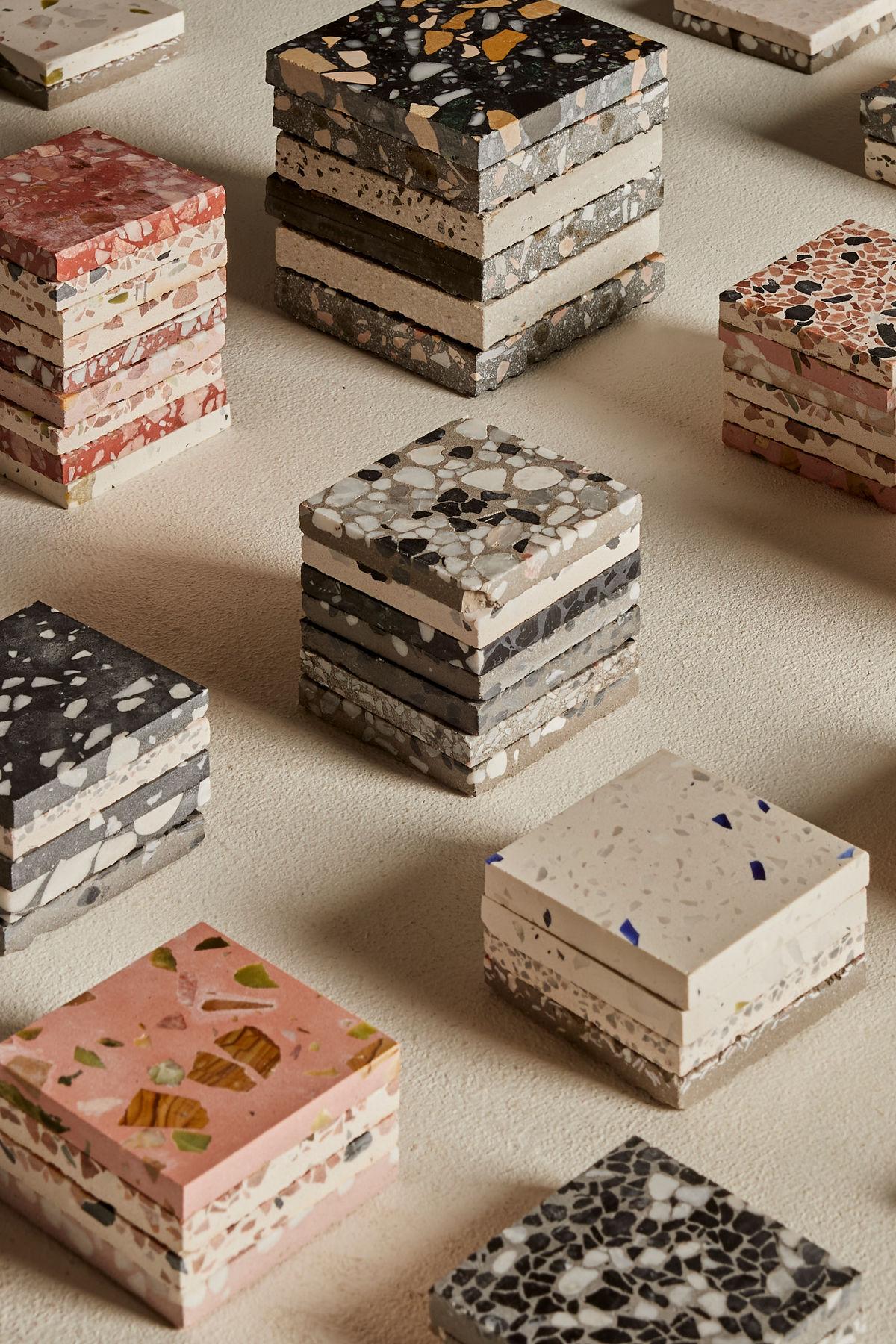
Terrazzo began as a practical solution—an inventive way to reuse stone fragments—and evolved into one of architecture’s most enduring finishes. From ancient pavements to Venetian craftsmanship and modern public landmarks, terrazzo’s story is one of sustainability, durability, and timeless design.

Dec 16,2025

2 min

Elements of Construction: Duct Tape

Elements of Construction: Duct Tape

Duct tape wasn’t meant to be iconic. It was meant to solve a problem. Born out of necessity during wartime, it quietly went on to become one of the most relied-upon materials on construction sites everywhere, proof that the simplest ideas often leave the biggest impact.

Dec 16,2025

2 min

Elements of Construction: Teflon

Elements of Construction: Teflon

Teflon was never meant for buildings. Discovered by accident while searching for a safer refrigerant gas, its refusal to react with almost anything turned it into one of construction’s underrated materials—protecting structures from corrosion, heat and damage.

Jan 21,2026

2 min

Why is India a Hotspot for Global Investors?

Why is India a Hotspot for Global Investors?

India ranks 5th globally, with 6.8% GDP growth, vast market, young population, UPI leadership, reforms, and 100% FDI in most sectors—making it a prime investment hotspot.

Feb 25,2026

8 min

Elements of Construction: Paints

Elements of Construction: Paints

Historically, wall colors from natural pigments like ultramarine (from lapis lazuli), lead white, mercury vermilion, and arsenic green were luxurious but highly toxic, involving dangerous mining, trade, and application that poisoned artisans. Paint was a labor-intensive process driven by experience, not safety. The Industrial Revolution brought synthetic pigments, making paint safe, scalable, and functional—protecting buildings from corrosion, fire, and weathering. Modern architecture benefits from engineered coatings, but today's safe colors echo a violent past of risk and human sacrifice.

Jan 06,2026

2 min

Elements of Construction: Plywood

Elements of Construction: Plywood

Plywood may seem like a modern construction staple, but its origins stretch back thousands of years. What began as an ancient technique of layering veneers for stability evolved through industrial innovation into a lightweight, high-strength material. Its true breakthrough came during World War I, where its speed, durability, and strength-to-weight ratio made it indispensable for aircraft and rapid construction—cementing plywood’s place as a foundational material of modern building.

Dec 16,2025

2 min

Elements of Construction: Terrazzo

Elements of Construction: Terrazzo

Terrazzo began as a practical solution—an inventive way to reuse stone fragments—and evolved into one of architecture’s most enduring finishes. From ancient pavements to Venetian craftsmanship and modern public landmarks, terrazzo’s story is one of sustainability, durability, and timeless design.

Dec 16,2025

2 min

Elements of Construction: Duct Tape

Elements of Construction: Duct Tape

Duct tape wasn’t meant to be iconic. It was meant to solve a problem. Born out of necessity during wartime, it quietly went on to become one of the most relied-upon materials on construction sites everywhere, proof that the simplest ideas often leave the biggest impact.

Dec 16,2025

2 min

Elements of Construction: Teflon

Elements of Construction: Teflon

Teflon was never meant for buildings. Discovered by accident while searching for a safer refrigerant gas, its refusal to react with almost anything turned it into one of construction’s underrated materials—protecting structures from corrosion, heat and damage.

Jan 21,2026

2 min

Why is India a Hotspot for Global Investors?

Why is India a Hotspot for Global Investors?

India ranks 5th globally, with 6.8% GDP growth, vast market, young population, UPI leadership, reforms, and 100% FDI in most sectors—making it a prime investment hotspot.

Feb 25,2026

8 min

Elements of Construction: Paints

Elements of Construction: Paints

Historically, wall colors from natural pigments like ultramarine (from lapis lazuli), lead white, mercury vermilion, and arsenic green were luxurious but highly toxic, involving dangerous mining, trade, and application that poisoned artisans. Paint was a labor-intensive process driven by experience, not safety. The Industrial Revolution brought synthetic pigments, making paint safe, scalable, and functional—protecting buildings from corrosion, fire, and weathering. Modern architecture benefits from engineered coatings, but today's safe colors echo a violent past of risk and human sacrifice.

Jan 06,2026

2 min

Elements of Construction: Plywood

Elements of Construction: Plywood

Plywood may seem like a modern construction staple, but its origins stretch back thousands of years. What began as an ancient technique of layering veneers for stability evolved through industrial innovation into a lightweight, high-strength material. Its true breakthrough came during World War I, where its speed, durability, and strength-to-weight ratio made it indispensable for aircraft and rapid construction—cementing plywood’s place as a foundational material of modern building.

Dec 16,2025

2 min

Elements of Construction: Terrazzo

Elements of Construction: Terrazzo

Terrazzo began as a practical solution—an inventive way to reuse stone fragments—and evolved into one of architecture’s most enduring finishes. From ancient pavements to Venetian craftsmanship and modern public landmarks, terrazzo’s story is one of sustainability, durability, and timeless design.

Dec 16,2025

2 min

Elements of Construction: Duct Tape

Elements of Construction: Duct Tape

Duct tape wasn’t meant to be iconic. It was meant to solve a problem. Born out of necessity during wartime, it quietly went on to become one of the most relied-upon materials on construction sites everywhere, proof that the simplest ideas often leave the biggest impact.

Dec 16,2025

2 min

Elements of Construction: Teflon

Elements of Construction: Teflon

Teflon was never meant for buildings. Discovered by accident while searching for a safer refrigerant gas, its refusal to react with almost anything turned it into one of construction’s underrated materials—protecting structures from corrosion, heat and damage.

Jan 21,2026

2 min