Client Logo

Our Solutions

Concrete Polishing

Concrete Floor Repair

Odus Flooring

Epoxy Flooring

Epoxy Repair

Terrazo Flooring

Mosaic Flooring

Use Cases

Concrete Floor Repairing

Warehouse Flooring

Plant Flooring

Hyperstore Flooring

Case Studies

Procter & Gamble

Reliance Industries

Hershey’s India

LG

L&T Constructions

Careers

Internships

Jobs

Resources

Blogs

Team Diaries

Purpose and Passion

Our Story

The Drafting Table

Products

Alkali Resistant Flooring

Odus Dust Block

Terrazzo Flooring

Concrete Polishing Chemicals

Colored Concrete

Fast Curing Additives

Our Solutions
Concrete Polishing

Concrete Floor Repair

Odus Flooring

Epoxy Flooring

Epoxy Repair

Terrazo Flooring

Mosaic Flooring

Use Cases
Concrete Floor Repairing

Warehouse Flooring

Plant Flooring

Hyperstore Flooring

Case Studies
Procter & Gamble

Reliance Industries

Hershey’s India

LG

L&T Constructions

Careers
Internships

Jobs

Resources
Blogs

Team Diaries

Purpose and Passion

Our Story

The Drafting Table

Products
Alkali Resistant Flooring

Odus Dust Block

Terrazzo Flooring

Concrete Polishing Chemicals

Colored Concrete

Fast Curing Additives

Terrazzo Flooring for Outdoor Spaces in India: Suitability, Design, and Maintenance

Oct 9 • 4 min read

blog_cover

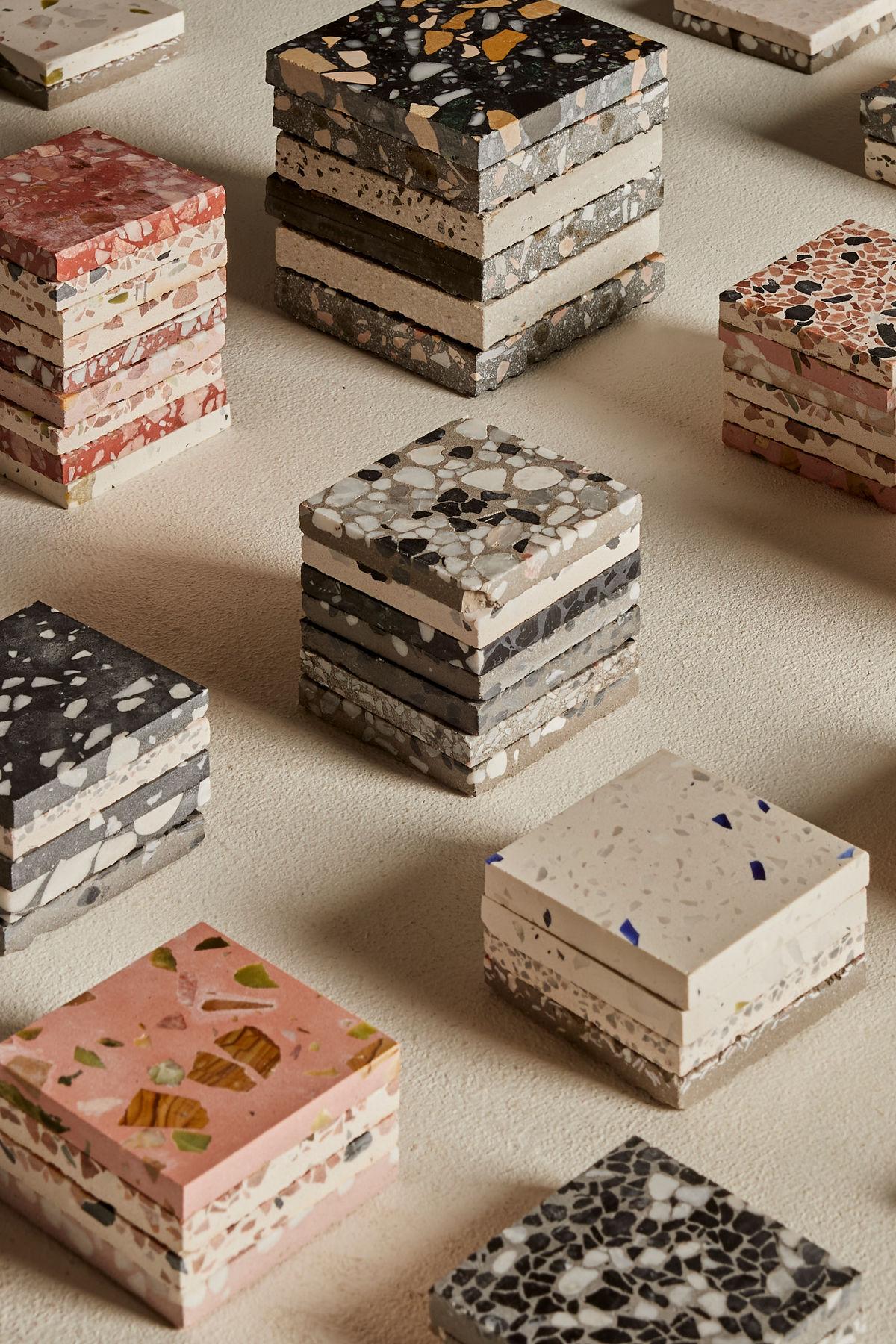
Terrazzo flooring, renowned for its seamless elegance and durability, is an increasingly popular choice for outdoor spaces in India. With its monolithic surface and customizable design, cement-based terrazzo systems, such as those by Rezomix, offer a robust solution for outdoor applications. 

This article explores the suitability of cement-based terrazzo for outdoor use in India’s tropical climate with sunlight and rainfall specially for outdoor applications. We have also included design ideas, and offers maintenance tips to ensure longevity.

Can Terrazzo Flooring Be Used Outdoors?

Yes, terrazzo flooring is well-suited for outdoor spaces when using cement-based systems, particularly in India’s diverse climates. 

Unlike epoxy-based terrazzo, which may degrade under UV exposure, cement-based terrazzo offers breathability and durability, making it ideal for outdoor environments. 

Its monolithic nature ensures a seamless surface without visible joints, reducing the risk of water seepage and enhancing structural integrity. 

The best part is - the colors neither fade under sunlight nor become dull when exposed to water. Also, the fact that it is not slippery when wet- makes it safe for outdoor use in monsoons as well.

Suitability in Indian Monsoon and Coastal Climates

India’s monsoon-heavy regions and coastal areas, such as Mumbai or Mangalore, pose challenges like high humidity, heavy rainfall, and salt exposure. Cement-based terrazzo excels in these conditions due to:

  • Moisture Resistance: The breathable nature of cementitious systems allows moisture to escape, preventing delamination in humid climates.

  • Durability: When properly sealed, cement-based terrazzo withstands heavy rain and temperature fluctuations, common in India’s tropical climate.

  • UV Resistance: Unlike epoxy, cement-based terrazzo is naturally UV-resistant, maintaining its color and finish under intense sunlight.

  • Salt Tolerance: In coastal areas, cementitious terrazzo resists corrosion from salt-laden air, especially when reinforced with specialized additives.

Advantages of Rezomix for Outdoor Terrazzo

Rezomix, a cement-based terrazzo system formulated with polypropylene (PP) fibers and specialized additives, is engineered for enhanced durability and versatility. Its key advantages include:

  • Enhanced Durability: PP fibers improve tensile strength, reducing the risk of cracking under thermal expansion or heavy foot traffic.

  • UV Resistance: Rezomix’s formulation ensures long-lasting color stability, even in sun-exposed outdoor areas like resort patios.

  • Versatility: Suitable for both indoor and outdoor flooring in residential, commercial, and institutional settings, from garden pathways to public plazas.

  • Moisture Management: Specialized additives enhance its water resistance, making it ideal for monsoon-prone regions.

  • Anti-Slip Properties: Rezomix can be finished with textured surfaces, ensuring safety in wet conditions, such as around swimming pools.

These features make Rezomix a standout choice for outdoor terrazzo projects in India, balancing functionality with aesthetic appeal.

https://www.rezovate.com/services/terrazzo-flooring

Popular Outdoor Applications

Terrazzo’s versatility and durability make it a favorite for various outdoor applications in India, including:

  • Gardens: Seamless terrazzo pathways in residential gardens or public parks provide a durable, low-maintenance surface that complements natural surroundings.

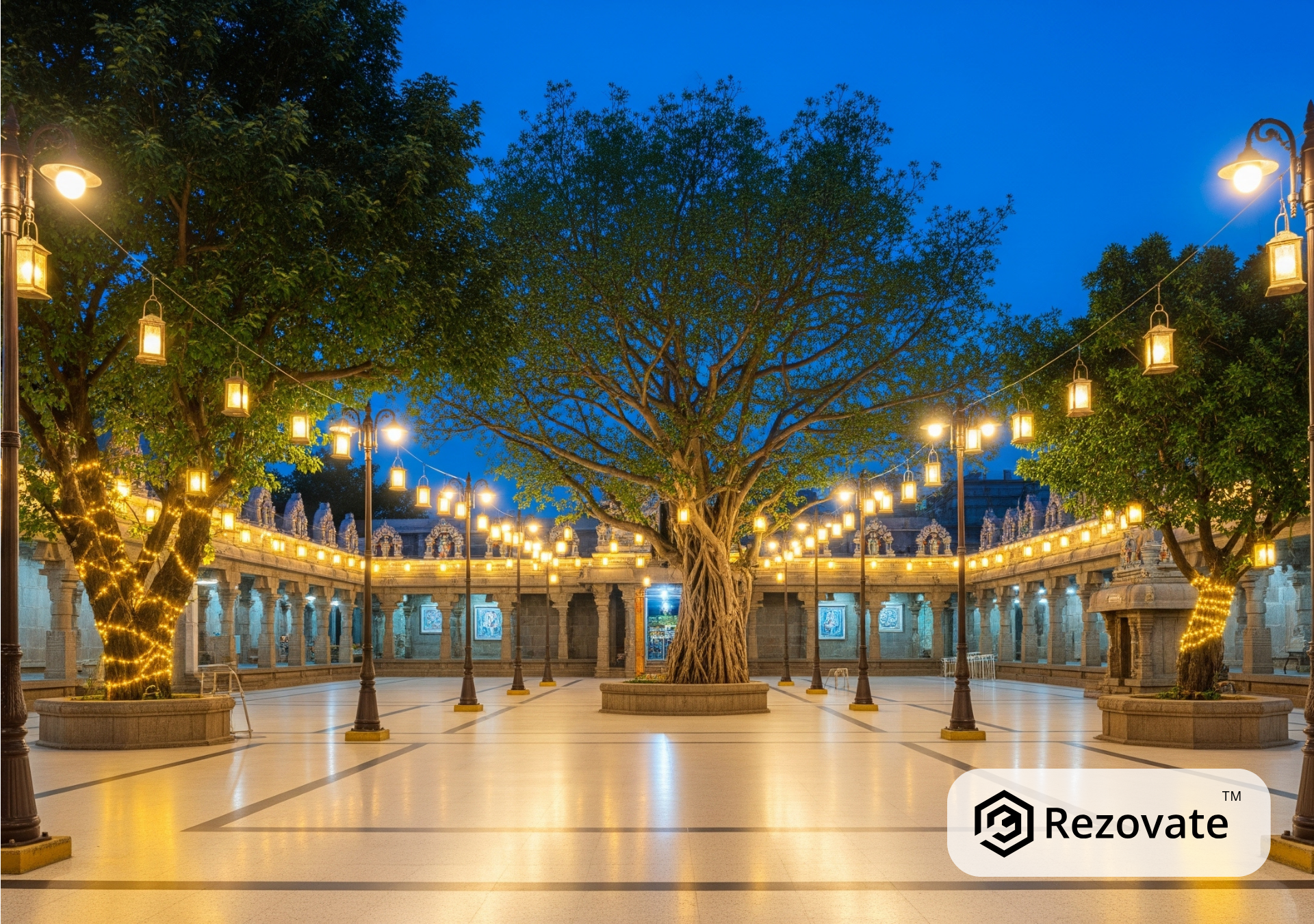
    View ideas for terrazzo flooring for Temples here
    The Drafting Table | Rezovate
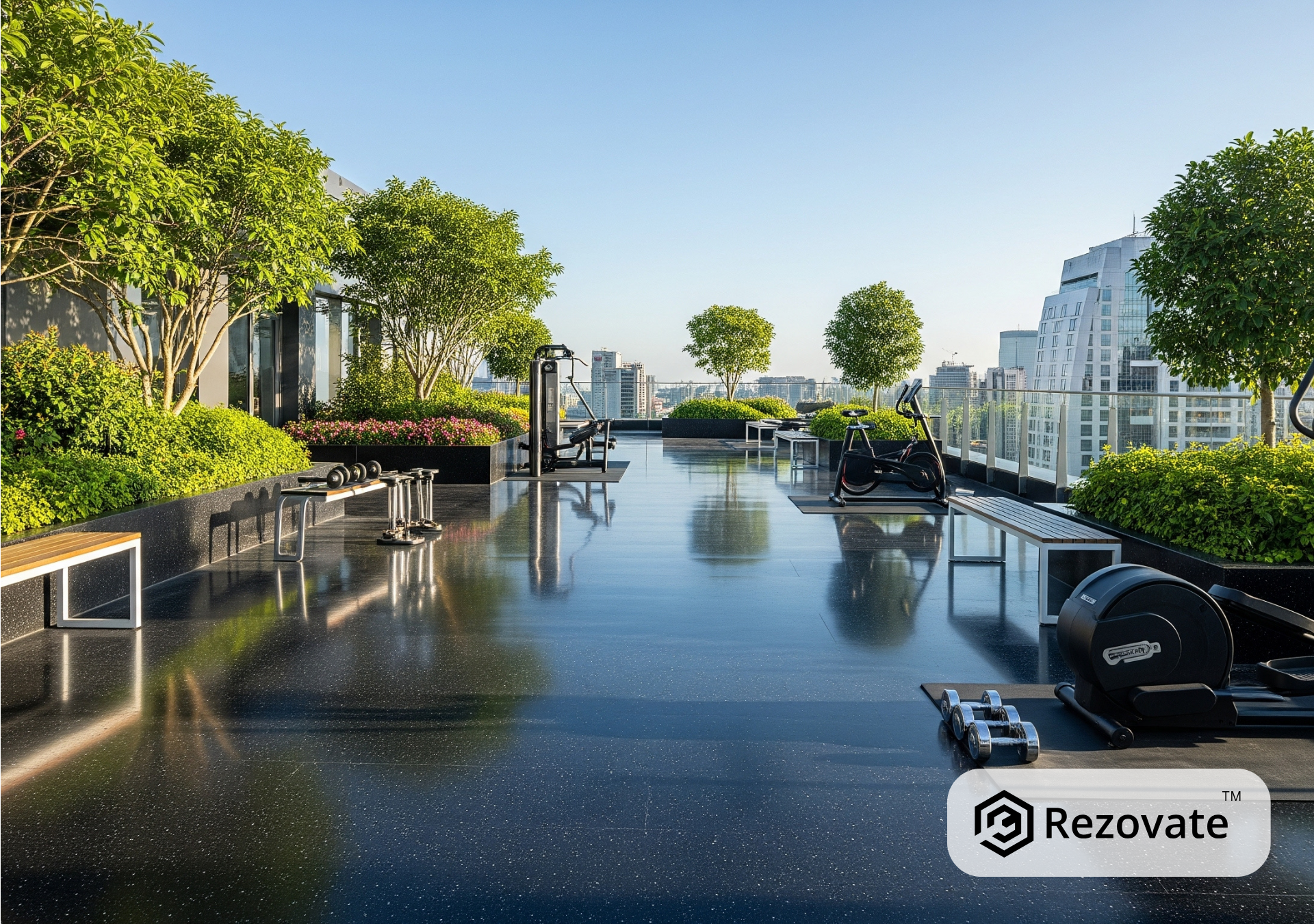
    Swimming Pools: Terrazzo’s water-resistant and anti-slip properties make it ideal for pool decks, enhancing safety and aesthetics in resorts or homes.

    View ideas for terrazzo flooring for swimming pools here
    The Drafting Table | Rezovate

  • Resort Patios: In luxury resorts, terrazzo creates elegant, customized patios that withstand heavy foot traffic and weather exposure.
    View ideas for terrazzo flooring for luxury resorts here

    The Drafting Table | Rezovate

  • Public Areas: Terrazzo is used in public plazas, temple courtyards, and outdoor seating areas, offering durability and easy maintenance in high-traffic zones.
    View ideas for terrazzo flooring for commercial buildings here
    The Drafting Table | Rezovate

Design Ideas for Outdoor Terrazzo

Terrazzo’s customizable nature gives immense creative freedom to architects in terms of shapes, patterns and colors. View our articles for design ideas with terrazzo here. 

Maintenance for Outdoor Terrazzo

To protect outdoor terrazzo from moisture and wear, especially in India’s monsoon and coastal climates, follow these maintenance tips:

  • Seal Regularly: Apply a high-quality, breathable, water-based penetrating sealer every 1–2 years to protect against moisture ingress and staining. In coastal areas, use sealers with anti-corrosive properties to combat salt exposure.

  • Clean with Neutral Cleaners: Use pH-neutral cleaners and an electric scrubber to remove dirt without damaging the finish. Avoid acidic cleaners that can erode the cement binder.

  • Monitor Drainage: Ensure proper drainage around terrazzo surfaces to prevent water pooling, especially during monsoons. Slope outdoor installations slightly (1–2%) to direct water away.

  • Address Wear Promptly: Inspect for cracks or wear in high-traffic areas like resort patios or public plazas, and repair with cement-based fillers to maintain the monolithic surface.

  • Protect from UV and Heat: While Rezomix is UV-resistant, periodic resealing enhances color retention in sun-exposed areas like garden pathways.

  • Anti-Slip Maintenance: Reapply textured or anti-slip coatings in wet areas like pool decks to ensure safety during rainy seasons.

    Cement-based terrazzo, particularly Rezomix with its PP fibers and specialized additives, is an excellent choice for outdoor flooring in India, offering durability, UV resistance, and aesthetic versatility. 

    Its ability to withstand monsoon rains, coastal humidity, and heavy foot traffic makes it ideal for gardens, pool decks, resort patios, and public spaces. 

    By incorporating rustic patterns for hilltop farmhouses or coastal designs for Mangalore bungalows, and following proper maintenance practices, outdoor terrazzo can elevate both functionality and beauty in India’s diverse outdoor settings. 

    For more information on sourcing Rezomix or connecting with skilled installers, contact us at info@rezovate.com or call us at 7869964996.


Our Clients

Hershey's
L&T Construction
LG
P&G
Yanjan
Eicher
Reliance
Icon

India's Best Industrial and Commercial Flooring Solution Provider

Trusted by 200+ clients. We provide flooring services and supply products for all sorts of Industrial flooring. Call us at +917869964996 or share contact details by filling the form below:

Related Blogs

Elements of Construction: Terrazzo

Elements of Construction: Terrazzo

Terrazzo began as a practical solution—an inventive way to reuse stone fragments—and evolved into one of architecture’s most enduring finishes. From ancient pavements to Venetian craftsmanship and modern public landmarks, terrazzo’s story is one of sustainability, durability, and timeless design.

Dec 16,2025

2 min

Elements of Construction: Duct Tape

Elements of Construction: Duct Tape

Duct tape wasn’t meant to be iconic. It was meant to solve a problem. Born out of necessity during wartime, it quietly went on to become one of the most relied-upon materials on construction sites everywhere, proof that the simplest ideas often leave the biggest impact.

Dec 16,2025

2 min

Elements of Construction: Teflon

Elements of Construction: Teflon

Teflon was never meant for buildings. Discovered by accident while searching for a safer refrigerant gas, its refusal to react with almost anything turned it into one of construction’s underrated materials—protecting structures from corrosion, heat and damage.

Jan 21,2026

2 min

Why is India a Hotspot for Global Investors?

Why is India a Hotspot for Global Investors?

India ranks 5th globally, with 6.8% GDP growth, vast market, young population, UPI leadership, reforms, and 100% FDI in most sectors—making it a prime investment hotspot.

Feb 25,2026

8 min

Elements of Construction: Paints

Elements of Construction: Paints

Historically, wall colors from natural pigments like ultramarine (from lapis lazuli), lead white, mercury vermilion, and arsenic green were luxurious but highly toxic, involving dangerous mining, trade, and application that poisoned artisans. Paint was a labor-intensive process driven by experience, not safety. The Industrial Revolution brought synthetic pigments, making paint safe, scalable, and functional—protecting buildings from corrosion, fire, and weathering. Modern architecture benefits from engineered coatings, but today's safe colors echo a violent past of risk and human sacrifice.

Jan 06,2026

2 min

Elements of Construction: Plywood

Elements of Construction: Plywood

Plywood may seem like a modern construction staple, but its origins stretch back thousands of years. What began as an ancient technique of layering veneers for stability evolved through industrial innovation into a lightweight, high-strength material. Its true breakthrough came during World War I, where its speed, durability, and strength-to-weight ratio made it indispensable for aircraft and rapid construction—cementing plywood’s place as a foundational material of modern building.

Dec 16,2025

2 min

Elements of Construction: Terrazzo

Elements of Construction: Terrazzo

Terrazzo began as a practical solution—an inventive way to reuse stone fragments—and evolved into one of architecture’s most enduring finishes. From ancient pavements to Venetian craftsmanship and modern public landmarks, terrazzo’s story is one of sustainability, durability, and timeless design.

Dec 16,2025

2 min

Elements of Construction: Duct Tape

Elements of Construction: Duct Tape

Duct tape wasn’t meant to be iconic. It was meant to solve a problem. Born out of necessity during wartime, it quietly went on to become one of the most relied-upon materials on construction sites everywhere, proof that the simplest ideas often leave the biggest impact.

Dec 16,2025

2 min

Elements of Construction: Teflon

Elements of Construction: Teflon

Teflon was never meant for buildings. Discovered by accident while searching for a safer refrigerant gas, its refusal to react with almost anything turned it into one of construction’s underrated materials—protecting structures from corrosion, heat and damage.

Jan 21,2026

2 min

Why is India a Hotspot for Global Investors?

Why is India a Hotspot for Global Investors?

India ranks 5th globally, with 6.8% GDP growth, vast market, young population, UPI leadership, reforms, and 100% FDI in most sectors—making it a prime investment hotspot.

Feb 25,2026

8 min

Elements of Construction: Paints

Elements of Construction: Paints

Historically, wall colors from natural pigments like ultramarine (from lapis lazuli), lead white, mercury vermilion, and arsenic green were luxurious but highly toxic, involving dangerous mining, trade, and application that poisoned artisans. Paint was a labor-intensive process driven by experience, not safety. The Industrial Revolution brought synthetic pigments, making paint safe, scalable, and functional—protecting buildings from corrosion, fire, and weathering. Modern architecture benefits from engineered coatings, but today's safe colors echo a violent past of risk and human sacrifice.

Jan 06,2026

2 min

Elements of Construction: Plywood

Elements of Construction: Plywood

Plywood may seem like a modern construction staple, but its origins stretch back thousands of years. What began as an ancient technique of layering veneers for stability evolved through industrial innovation into a lightweight, high-strength material. Its true breakthrough came during World War I, where its speed, durability, and strength-to-weight ratio made it indispensable for aircraft and rapid construction—cementing plywood’s place as a foundational material of modern building.

Dec 16,2025

2 min

Elements of Construction: Terrazzo

Elements of Construction: Terrazzo

Terrazzo began as a practical solution—an inventive way to reuse stone fragments—and evolved into one of architecture’s most enduring finishes. From ancient pavements to Venetian craftsmanship and modern public landmarks, terrazzo’s story is one of sustainability, durability, and timeless design.

Dec 16,2025

2 min

Elements of Construction: Duct Tape

Elements of Construction: Duct Tape

Duct tape wasn’t meant to be iconic. It was meant to solve a problem. Born out of necessity during wartime, it quietly went on to become one of the most relied-upon materials on construction sites everywhere, proof that the simplest ideas often leave the biggest impact.

Dec 16,2025

2 min

Elements of Construction: Teflon

Elements of Construction: Teflon

Teflon was never meant for buildings. Discovered by accident while searching for a safer refrigerant gas, its refusal to react with almost anything turned it into one of construction’s underrated materials—protecting structures from corrosion, heat and damage.

Jan 21,2026

2 min