Dec 16 • 2 min read

We take glass for granted in architecture. It frames views, shapes daylight, and quietly separates inside from outside. Yet for most of history, glass was not a building material at all. It was rare, fragile, and closer to a jewel than a construction element. Its slow journey into architecture reshaped how buildings admit light, create comfort, and express meaning.
Long before glass entered buildings, it existed in nature. Obsidian, a volcanic glass formed by rapidly cooled lava, was used by early humans for tools and weapons. Its sharp edges and smooth surface revealed the unique behavior of glass long before it became part of architecture.
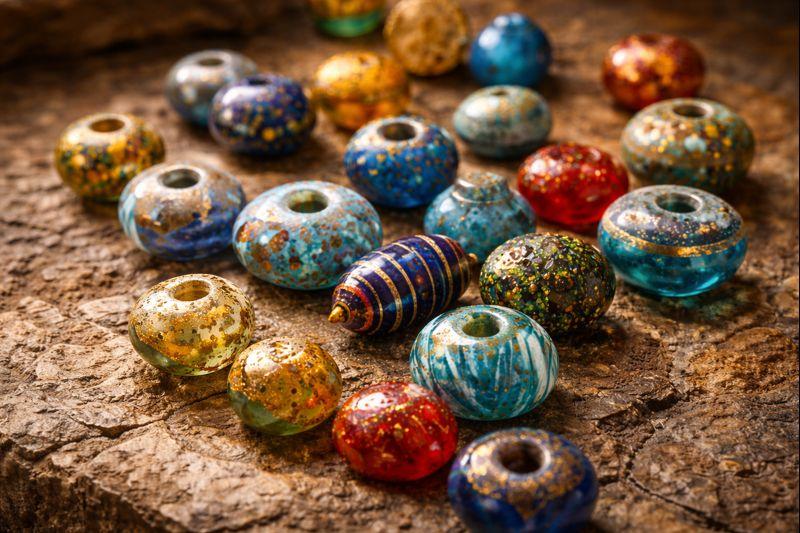
The first man made glass appeared around 3500 BCE in Mesopotamia and Egypt, emerging accidentally in high temperature furnaces used by potters and metalworkers. Melted sand and mineral salts cooled into a hard, glossy material. At this early stage, glass had no architectural role. It appeared as beads, ornaments, and small vessels. By around 1500 BCE, Egyptian craftsmen learned to control glassmaking and produced delicate containers for perfumes and oils. Glass was precious, symbolic, and far removed from construction.

Glass is made mainly from sand, soda, and lime. Sand gives structure. Soda lowers the melting temperature. Lime adds durability. When heated, these ingredients melt into a liquid and cool into a solid without forming crystals. This structure gives glass its defining architectural quality. It allows light to pass through while still forming a physical boundary. Small changes in composition affect strength, clarity, color, and thermal behavior, making glass adaptable to different building needs.
Glass entered architecture in a meaningful way during the Roman period. With the invention of glassblowing in the first century BCE, production became faster and more widespread. The Romans began using thick cast glass sheets to close openings in large public buildings. In vast bath complexes such as the Baths of Caracalla, glass admitted daylight while shielding interiors from wind and cold. These early glazed openings allowed large, enclosed spaces to remain warm and usable, marking an early step toward environmental control in architecture.
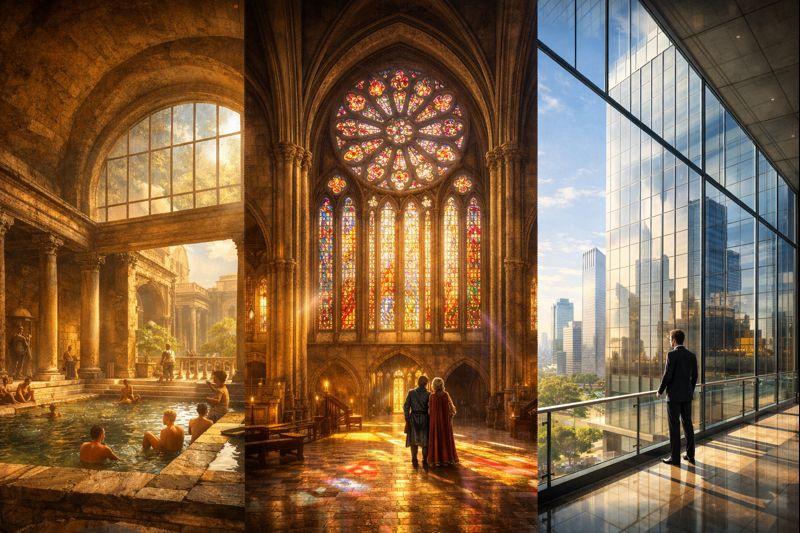
After the fall of the Roman Empire, glassmaking continued and slowly evolved. In the Gothic period, architecture embraced glass not just as enclosure but as expression. Cathedrals like Chartres and Notre Dame replaced heavy stone walls with expansive stained-glass windows. Light was filtered, colored, and animated, transforming interiors into glowing spaces. Glass reshaped the experience of architecture, turning walls into luminous surfaces and space into something felt as much as seen.
In modern architecture, glass moved from ornament to system. Industrial manufacturing made large, clear, and strong glass panels possible, changing how buildings related to their surroundings. Modern glass towers use façades of layered and coated glass to control heat, glare, sound, and safety. Buildings such as the Seagram Building and countless contemporary high rises use glass to express openness while carefully managing environmental performance. Smart glass now responds to light and electricity, adjusting transparency to improve comfort.
From Roman bathhouses to Gothic cathedrals and modern glass towers, glass has shaped architecture without ever carrying its weight. It frames views, directs light, and softens the boundary between inside and outside. For architects, glass is more than a material. It is a way of thinking about space, light, and the relationship between people and the built environment.


Related Blogs