Client Logo

Our Solutions

Concrete Polishing

Concrete Floor Repair

Odus Flooring

Epoxy Flooring

Epoxy Repair

Terrazo Flooring

Mosaic Flooring

Use Cases

Concrete Floor Repairing

Warehouse Flooring

Plant Flooring

Hyperstore Flooring

Case Studies

Procter & Gamble

Reliance Industries

Hershey’s India

LG

L&T Constructions

Careers

Internships

Jobs

Resources

Blogs

Team Diaries

Purpose and Passion

Our Story

The Drafting Table

Products

Alkali Resistant Flooring

Odus Dust Block

Terrazzo Flooring

Concrete Polishing Chemicals

Colored Concrete

Fast Curing Additives

Our Solutions
Concrete Polishing

Concrete Floor Repair

Odus Flooring

Epoxy Flooring

Epoxy Repair

Terrazo Flooring

Mosaic Flooring

Use Cases
Concrete Floor Repairing

Warehouse Flooring

Plant Flooring

Hyperstore Flooring

Case Studies
Procter & Gamble

Reliance Industries

Hershey’s India

LG

L&T Constructions

Careers
Internships

Jobs

Resources
Blogs

Team Diaries

Purpose and Passion

Our Story

The Drafting Table

Products
Alkali Resistant Flooring

Odus Dust Block

Terrazzo Flooring

Concrete Polishing Chemicals

Colored Concrete

Fast Curing Additives

Elements of Construction: Aluminium

Dec 16 • 3 min read

blog_cover

There was a time when aluminum was more precious than gold. Today, it wraps our buildings, frames our windows, and covers our skylines. Yet, the story of this silvery metal begins not in a foundry but deep within the ordinary earth beneath our feet.

The Hidden Metal Beneath Our Feet

For thousands of years, humanity lived surrounded by aluminum without knowing it. This metal is the most abundant in the Earth’s crust, hidden inside common minerals like bauxite and alum. Ancient Egyptians and Babylonians used alum for dyeing fabrics and purifying water as early as 2000 BCE. They appreciated its usefulness but had no idea that a lightweight, shining metal lay trapped within it.

The idea that something so bright and metallic could be hiding in dull clay was almost unthinkable. For centuries, even the most skilled alchemists failed to extract it.

The Race to Unlock the Secret

The first real breakthrough came in 1825 when the Danish scientist Hans Christian Orsted succeeded in producing tiny specks of metallic aluminum. A few years later, Friedrich Wöhler refined the process and managed to create small, pure samples. The new metal astonished everyone. It was light, silvery, and unlike anything else known to science at the time.

But there was a problem. Aluminum was almost impossible to make in large quantities. It remained so rare that in the mid-1800s, it was considered a luxury. Napoleon III of France reserved aluminum cutlery for his most honored guests, while everyone else had to eat with gold utensils.

When the Washington Monument was completed in 1884, its tiny aluminum capstone was displayed as a marvel. At that time, aluminum was more expensive than silver.

The Spark That Changed Everything

Then, in 1886, a miracle of modern chemistry occurred. Two young inventors, working independently on opposite sides of the Atlantic, made the same discovery within weeks of each other. Charles Martin Hall in the United States and Paul Héroult in France found that by passing an electric current through molten aluminum ore, they could release the metal easily and affordably.

This process, now known as the Hall–Héroult method, changed everything. What was once a rare curiosity becoming an industrial metal that could be produced by the ton. The age of aluminum had begun.

From the Laboratory to the Skyline

By the early 1900s, architects and engineers began to notice aluminum’s incredible qualities. It was light but strong, resistant to rust, easy to shape, and had a bright, modern look. These qualities made it a dream material for the new age of skyscrapers and machines.

One of aluminum’s earliest appearances in major architecture was inside the Empire State Building, completed in 1931. It was used in the interior frames and decorative details, marking the beginning of aluminum’s long partnership with architecture. As cities grew taller and technology advanced, aluminum became a symbol of modernity, efficiency, and progress.

By the middle of the 20th century, entire facades and roofing systems were being made of aluminum. Its silvery surfaces reflected light beautifully, and its light weight allowed for daring new designs. Architects embraced it as the metal of the modern age.

The Green Metal of the Future

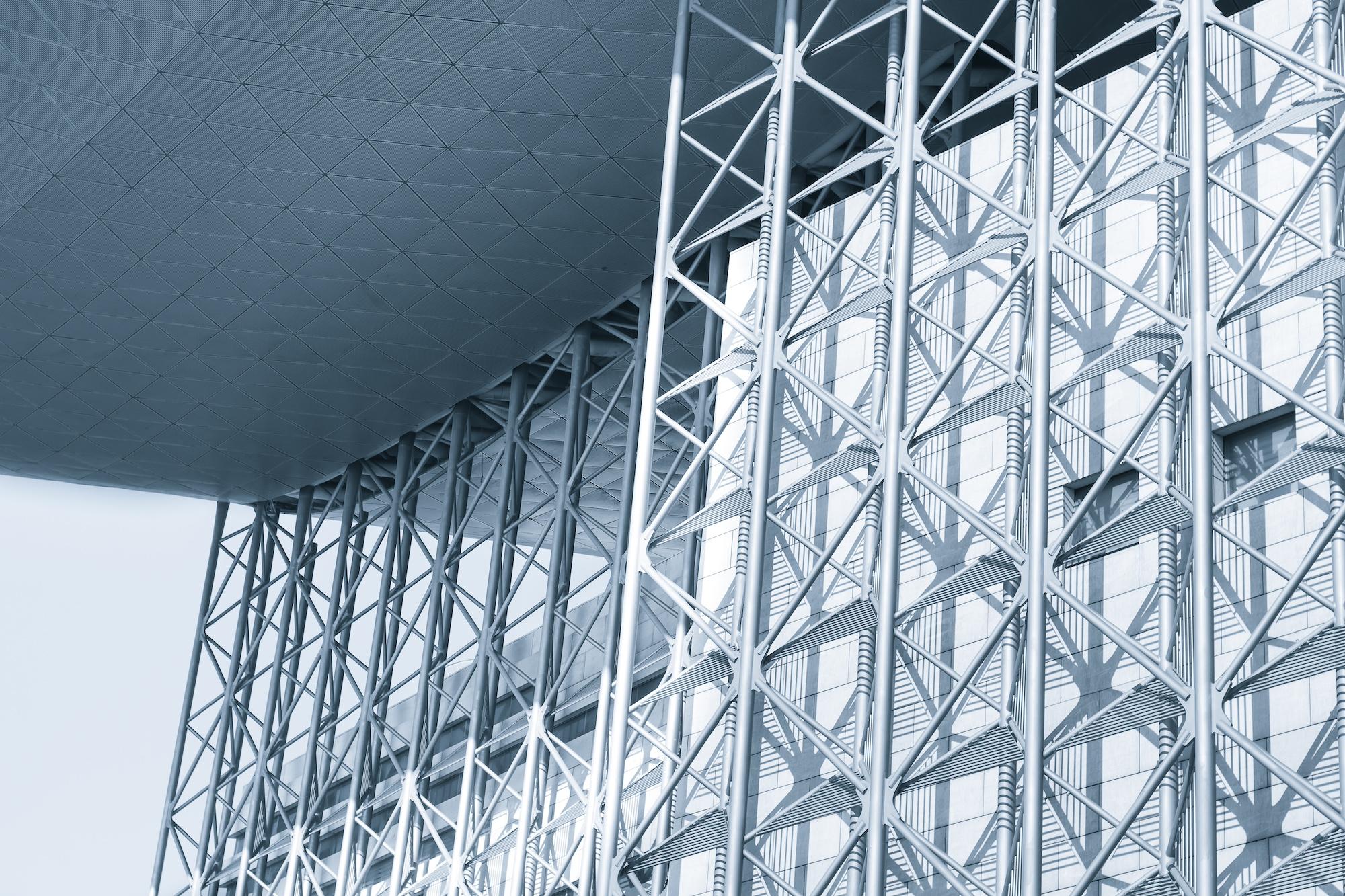
Today, aluminum is everywhere in construction—from window frames and curtain walls to cladding panels and bridges. Its strength, lightness, and resistance to corrosion make it ideal for both aesthetics and performance.

But perhaps aluminum’s greatest gift lies in its sustainability. It can be recycled endlessly without losing quality and recycling it uses only a fraction of the energy required to produce new aluminum. In an era focused on reducing waste and carbon emissions, this once-precious metal has become one of the greenest materials on Earth.

image source: https://gharpedia.com/blog/use-of-aluminium-in-construction/

Our Clients

Hershey's
L&T Construction
LG
P&G
Yanjan
Eicher
Reliance
Icon

India's Best Industrial and Commercial Flooring Solution Provider

Trusted by 200+ clients. We provide flooring services and supply products for all sorts of Industrial flooring. Call us at +917869964996 or share contact details by filling the form below:

Related Blogs

Elements of Construction: Terrazzo

Elements of Construction: Terrazzo

Terrazzo began as a practical solution—an inventive way to reuse stone fragments—and evolved into one of architecture’s most enduring finishes. From ancient pavements to Venetian craftsmanship and modern public landmarks, terrazzo’s story is one of sustainability, durability, and timeless design.

Dec 16,2025

2 min

Elements of Construction: Duct Tape

Elements of Construction: Duct Tape

Duct tape wasn’t meant to be iconic. It was meant to solve a problem. Born out of necessity during wartime, it quietly went on to become one of the most relied-upon materials on construction sites everywhere, proof that the simplest ideas often leave the biggest impact.

Dec 16,2025

2 min

Elements of Construction: Teflon

Elements of Construction: Teflon

Teflon was never meant for buildings. Discovered by accident while searching for a safer refrigerant gas, its refusal to react with almost anything turned it into one of construction’s underrated materials—protecting structures from corrosion, heat and damage.

Jan 14,2026

2 min

Elements of Construction: Paints

Elements of Construction: Paints

Historically, wall colors from natural pigments like ultramarine (from lapis lazuli), lead white, mercury vermilion, and arsenic green were luxurious but highly toxic, involving dangerous mining, trade, and application that poisoned artisans. Paint was a labor-intensive process driven by experience, not safety. The Industrial Revolution brought synthetic pigments, making paint safe, scalable, and functional—protecting buildings from corrosion, fire, and weathering. Modern architecture benefits from engineered coatings, but today's safe colors echo a violent past of risk and human sacrifice.

Jan 06,2026

2 min

Elements of Construction: Plywood

Elements of Construction: Plywood

Plywood may seem like a modern construction staple, but its origins stretch back thousands of years. What began as an ancient technique of layering veneers for stability evolved through industrial innovation into a lightweight, high-strength material. Its true breakthrough came during World War I, where its speed, durability, and strength-to-weight ratio made it indispensable for aircraft and rapid construction—cementing plywood’s place as a foundational material of modern building.

Dec 16,2025

2 min

Elements of Construction: Terrazzo

Elements of Construction: Terrazzo

Terrazzo began as a practical solution—an inventive way to reuse stone fragments—and evolved into one of architecture’s most enduring finishes. From ancient pavements to Venetian craftsmanship and modern public landmarks, terrazzo’s story is one of sustainability, durability, and timeless design.

Dec 16,2025

2 min

Elements of Construction: Duct Tape

Elements of Construction: Duct Tape

Duct tape wasn’t meant to be iconic. It was meant to solve a problem. Born out of necessity during wartime, it quietly went on to become one of the most relied-upon materials on construction sites everywhere, proof that the simplest ideas often leave the biggest impact.

Dec 16,2025

2 min

Elements of Construction: Teflon

Elements of Construction: Teflon

Teflon was never meant for buildings. Discovered by accident while searching for a safer refrigerant gas, its refusal to react with almost anything turned it into one of construction’s underrated materials—protecting structures from corrosion, heat and damage.

Jan 14,2026

2 min

Elements of Construction: Paints

Elements of Construction: Paints

Historically, wall colors from natural pigments like ultramarine (from lapis lazuli), lead white, mercury vermilion, and arsenic green were luxurious but highly toxic, involving dangerous mining, trade, and application that poisoned artisans. Paint was a labor-intensive process driven by experience, not safety. The Industrial Revolution brought synthetic pigments, making paint safe, scalable, and functional—protecting buildings from corrosion, fire, and weathering. Modern architecture benefits from engineered coatings, but today's safe colors echo a violent past of risk and human sacrifice.

Jan 06,2026

2 min

Elements of Construction: Plywood

Elements of Construction: Plywood

Plywood may seem like a modern construction staple, but its origins stretch back thousands of years. What began as an ancient technique of layering veneers for stability evolved through industrial innovation into a lightweight, high-strength material. Its true breakthrough came during World War I, where its speed, durability, and strength-to-weight ratio made it indispensable for aircraft and rapid construction—cementing plywood’s place as a foundational material of modern building.

Dec 16,2025

2 min

Elements of Construction: Terrazzo

Elements of Construction: Terrazzo

Terrazzo began as a practical solution—an inventive way to reuse stone fragments—and evolved into one of architecture’s most enduring finishes. From ancient pavements to Venetian craftsmanship and modern public landmarks, terrazzo’s story is one of sustainability, durability, and timeless design.

Dec 16,2025

2 min

Elements of Construction: Duct Tape

Elements of Construction: Duct Tape

Duct tape wasn’t meant to be iconic. It was meant to solve a problem. Born out of necessity during wartime, it quietly went on to become one of the most relied-upon materials on construction sites everywhere, proof that the simplest ideas often leave the biggest impact.

Dec 16,2025

2 min

Elements of Construction: Teflon

Elements of Construction: Teflon

Teflon was never meant for buildings. Discovered by accident while searching for a safer refrigerant gas, its refusal to react with almost anything turned it into one of construction’s underrated materials—protecting structures from corrosion, heat and damage.

Jan 14,2026

2 min