Client Logo

Our Solutions

Concrete Polishing

Concrete Floor Repair

Odus Flooring

Epoxy Flooring

Epoxy Repair

Terrazo Flooring

Mosaic Flooring

Use Cases

Concrete Floor Repairing

Warehouse Flooring

Plant Flooring

Hyperstore Flooring

Case Studies

Procter & Gamble

Reliance Industries

Hershey’s India

LG

L&T Constructions

Careers

Internships

Jobs

Resources

Blogs

Team Diaries

Purpose and Passion

Our Story

The Drafting Table

Products

Alkali Resistant Flooring

Odus Dust Block

Terrazzo Flooring

Concrete Polishing Chemicals

Colored Concrete

Fast Curing Additives

Our Solutions
Concrete Polishing

Concrete Floor Repair

Odus Flooring

Epoxy Flooring

Epoxy Repair

Terrazo Flooring

Mosaic Flooring

Use Cases
Concrete Floor Repairing

Warehouse Flooring

Plant Flooring

Hyperstore Flooring

Case Studies
Procter & Gamble

Reliance Industries

Hershey’s India

LG

L&T Constructions

Careers
Internships

Jobs

Resources
Blogs

Team Diaries

Purpose and Passion

Our Story

The Drafting Table

Products
Alkali Resistant Flooring

Odus Dust Block

Terrazzo Flooring

Concrete Polishing Chemicals

Colored Concrete

Fast Curing Additives

Ensuring Workplace Safety: Understanding OSHA and Its Importance

Mar 3 • 3 min read

blog_cover

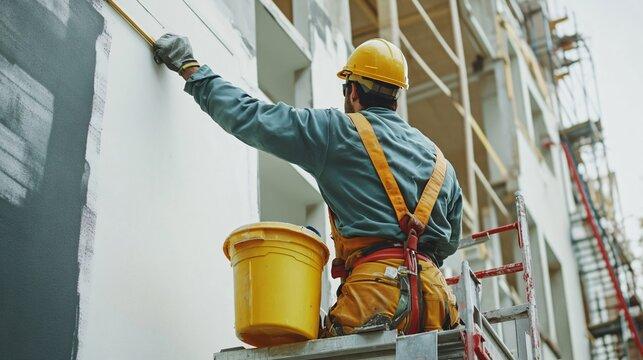
Workplace safety is a critical aspect of any industry, ensuring that employees operate in an environment free from hazards. The Occupational Safety and Health Administration (OSHA) plays a crucial role in enforcing safety standards and regulations to protect workers across various sectors. Understanding OSHA's purpose, regulations, and benefits can help employers create a safer workplace while complying with legal requirements.

What is OSHA?

The Occupational Safety and Health Administration (OSHA) is a U.S. government agency established under the Occupational Safety and Health Act of 1970. Its primary goal is to enforce workplace safety laws, reduce workplace injuries, and promote a safe and healthy work environment.

Why is OSHA Needed?

Many industries, including construction, manufacturing, and warehousing, involve significant hazards such as heavy machinery, chemicals, and high-risk work conditions. OSHA ensures that businesses provide a safe workplace by implementing strict regulations and enforcing compliance. Key Reasons OSHA is Essential:

  • Reduces workplace injuries and illnesses

  • Holds employers accountable for safety

  • Protects workers’ rights

  • Provides education and training on safety standards

  • Encourages hazard prevention rather than just compliance

OSHA Requirements and Employer Responsibilities

Employers must adhere to OSHA regulations to ensure a safe working environment. Below are key responsibilities employers must fulfill:

Providing a Hazard-Free Workplace

Employers must identify and eliminate recognized hazards to ensure a safe work environment. Compliance with OSHA standards is mandatory to prevent workplace accidents and health risks.

Workplace Inspection & Compliance

Employers must regularly examine workplace conditions to ensure they meet OSHA’s safety standards. Failure to comply can lead to penalties and legal consequences.

Proper Tools and Equipment

Employers must provide workers with safe tools and equipment, ensuring proper maintenance to prevent malfunctions and accidents.

Use of Warning Signs and Labels

Employers should implement color codes, posters, labels, or signs to warn employees of potential hazards, increasing awareness and preventing injuries.

Safety Procedures and Training

  • Employers must develop and update safety procedures and ensure all employees follow them.

  • Safety training should be provided in a language and vocabulary workers understand to ensure clarity.

Hazard Communication

  • Employers dealing with hazardous chemicals must implement a written hazard communication program and train employees on proper precautions.

  • Safety Data Sheets (SDS) must be readily available to employees.

Medical Examinations & Training

Employers must provide medical examinations and training when required by OSHA standards.

Displaying OSHA Posters

The OSHA poster (or a state-equivalent version) must be displayed in a prominent workplace location, informing employees of their rights.

Reporting Workplace Incidents

  • Work-related fatalities must be reported within 8 hours.

  • Hospitalizations, amputations, or eye losses must be reported within 24 hours.

Record-Keeping of Injuries and Illnesses

  • Employers must keep records of work-related injuries and illnesses.

  • Employers with 10 or fewer employees or those in low-hazard industries are exempt.

Access to Workplace Safety Logs

  • Employees and their representatives must have access to the OSHA Form 300 log of work-related injuries and illnesses.

  • Employers must post OSHA Form 300A (summary of injuries and illnesses) from February 1 to April 30.

Employee Rights and Protection

  • Employees must have access to their medical and exposure records.

  • Employers cannot discriminate or retaliate against workers who report unsafe conditions.

OSHA Citations & Compliance

  • OSHA citations must be posted at or near the work area until the violation is corrected.

  • Employers must correct violations by the deadline and submit necessary documentation.

The Importance of Safety & Health Programs

OSHA encourages employers to adopt comprehensive safety and health programs to minimize workplace risks. The most effective programs include:

  • Management Leadership – Commitment to safety from top management.

  • Worker Participation – Employees actively contributing to workplace safety improvements.

  • Hazard Identification & Prevention – Regular risk assessments and proactive measures.

Benefits of OSHA Compliance

  1. Reduced Workplace Accidents – Fewer injuries and fatalities.

  2. Improved Productivity – A safe environment boosts efficiency and morale.

  3. Legal Protection – Compliance reduces the risk of lawsuits and penalties.

  4. Lower Costs – Minimizing workplace hazards decreases medical and legal expenses.

  5. Enhanced Reputation – A strong safety record builds trust with employees and clients.

Conclusion

Understanding and following OSHA regulations is essential for employers to create a safe and productive work environment. Prioritizing workplace safety benefits both employees and businesses by reducing accidents, increasing compliance, and fostering a positive work culture. Employers should take proactive steps to implement OSHA standards and continuously improve workplace safety practices.

Our Clients

Hershey's
L&T Construction
LG
P&G
Yanjan
Eicher
Reliance
Icon

India's Best Industrial and Commercial Flooring Solution Provider

Trusted by 200+ clients. We provide flooring services and supply products for all sorts of Industrial flooring. Call us at +917869964996 or share contact details by filling the form below:

Related Blogs

Elements of Construction: Terrazzo

Elements of Construction: Terrazzo

Terrazzo began as a practical solution—an inventive way to reuse stone fragments—and evolved into one of architecture’s most enduring finishes. From ancient pavements to Venetian craftsmanship and modern public landmarks, terrazzo’s story is one of sustainability, durability, and timeless design.

Dec 16,2025

2 min

Elements of Construction: Duct Tape

Elements of Construction: Duct Tape

Duct tape wasn’t meant to be iconic. It was meant to solve a problem. Born out of necessity during wartime, it quietly went on to become one of the most relied-upon materials on construction sites everywhere, proof that the simplest ideas often leave the biggest impact.

Dec 16,2025

2 min

Elements of Construction: Teflon

Elements of Construction: Teflon

Teflon was never meant for buildings. Discovered by accident while searching for a safer refrigerant gas, its refusal to react with almost anything turned it into one of construction’s underrated materials—protecting structures from corrosion, heat and damage.

Jan 21,2026

2 min

Why is India a Hotspot for Global Investors?

Why is India a Hotspot for Global Investors?

India ranks 5th globally, with 6.8% GDP growth, vast market, young population, UPI leadership, reforms, and 100% FDI in most sectors—making it a prime investment hotspot.

Feb 25,2026

8 min

Elements of Construction: Paints

Elements of Construction: Paints

Historically, wall colors from natural pigments like ultramarine (from lapis lazuli), lead white, mercury vermilion, and arsenic green were luxurious but highly toxic, involving dangerous mining, trade, and application that poisoned artisans. Paint was a labor-intensive process driven by experience, not safety. The Industrial Revolution brought synthetic pigments, making paint safe, scalable, and functional—protecting buildings from corrosion, fire, and weathering. Modern architecture benefits from engineered coatings, but today's safe colors echo a violent past of risk and human sacrifice.

Jan 06,2026

2 min

Elements of Construction: Plywood

Elements of Construction: Plywood

Plywood may seem like a modern construction staple, but its origins stretch back thousands of years. What began as an ancient technique of layering veneers for stability evolved through industrial innovation into a lightweight, high-strength material. Its true breakthrough came during World War I, where its speed, durability, and strength-to-weight ratio made it indispensable for aircraft and rapid construction—cementing plywood’s place as a foundational material of modern building.

Dec 16,2025

2 min

Elements of Construction: Terrazzo

Elements of Construction: Terrazzo

Terrazzo began as a practical solution—an inventive way to reuse stone fragments—and evolved into one of architecture’s most enduring finishes. From ancient pavements to Venetian craftsmanship and modern public landmarks, terrazzo’s story is one of sustainability, durability, and timeless design.

Dec 16,2025

2 min

Elements of Construction: Duct Tape

Elements of Construction: Duct Tape

Duct tape wasn’t meant to be iconic. It was meant to solve a problem. Born out of necessity during wartime, it quietly went on to become one of the most relied-upon materials on construction sites everywhere, proof that the simplest ideas often leave the biggest impact.

Dec 16,2025

2 min

Elements of Construction: Teflon

Elements of Construction: Teflon

Teflon was never meant for buildings. Discovered by accident while searching for a safer refrigerant gas, its refusal to react with almost anything turned it into one of construction’s underrated materials—protecting structures from corrosion, heat and damage.

Jan 21,2026

2 min

Why is India a Hotspot for Global Investors?

Why is India a Hotspot for Global Investors?

India ranks 5th globally, with 6.8% GDP growth, vast market, young population, UPI leadership, reforms, and 100% FDI in most sectors—making it a prime investment hotspot.

Feb 25,2026

8 min

Elements of Construction: Paints

Elements of Construction: Paints

Historically, wall colors from natural pigments like ultramarine (from lapis lazuli), lead white, mercury vermilion, and arsenic green were luxurious but highly toxic, involving dangerous mining, trade, and application that poisoned artisans. Paint was a labor-intensive process driven by experience, not safety. The Industrial Revolution brought synthetic pigments, making paint safe, scalable, and functional—protecting buildings from corrosion, fire, and weathering. Modern architecture benefits from engineered coatings, but today's safe colors echo a violent past of risk and human sacrifice.

Jan 06,2026

2 min

Elements of Construction: Plywood

Elements of Construction: Plywood

Plywood may seem like a modern construction staple, but its origins stretch back thousands of years. What began as an ancient technique of layering veneers for stability evolved through industrial innovation into a lightweight, high-strength material. Its true breakthrough came during World War I, where its speed, durability, and strength-to-weight ratio made it indispensable for aircraft and rapid construction—cementing plywood’s place as a foundational material of modern building.

Dec 16,2025

2 min

Elements of Construction: Terrazzo

Elements of Construction: Terrazzo

Terrazzo began as a practical solution—an inventive way to reuse stone fragments—and evolved into one of architecture’s most enduring finishes. From ancient pavements to Venetian craftsmanship and modern public landmarks, terrazzo’s story is one of sustainability, durability, and timeless design.

Dec 16,2025

2 min

Elements of Construction: Duct Tape

Elements of Construction: Duct Tape

Duct tape wasn’t meant to be iconic. It was meant to solve a problem. Born out of necessity during wartime, it quietly went on to become one of the most relied-upon materials on construction sites everywhere, proof that the simplest ideas often leave the biggest impact.

Dec 16,2025

2 min

Elements of Construction: Teflon

Elements of Construction: Teflon

Teflon was never meant for buildings. Discovered by accident while searching for a safer refrigerant gas, its refusal to react with almost anything turned it into one of construction’s underrated materials—protecting structures from corrosion, heat and damage.

Jan 21,2026

2 min