Elements of Construction: Steel
Dec 16 • 3 min read
We live in the Age of Steel. For architects and builders, steel is not just a material but a system. It defines spans, controls load paths, enables height, and allows buildings to grow lighter as they grow taller. Understanding steel is essential to understanding modern construction.
Steel did not begin as a structural material. Its earliest forms emerged during the Iron Age around 1200 BCE, when iron ore was heated with charcoal in simple furnaces. These furnaces could not fully melt iron, producing a spongy mass known as a bloom. When this iron was repeatedly heated and forged, it sometimes absorbed carbon from the charcoal. This accidental carbon addition produced steel, a material significantly stronger and harder than pure iron.
Ancient metalworkers learned through experience that small changes in the material altered performance. Indian and Middle Eastern craftsmen refined these methods, producing high quality steels such as Wootz steel by around 300 BCE. Although impressive, these early steels were expensive, inconsistent, and unsuitable for large scale construction. Architecture still depended on stone, brick, and timber, with iron used sparingly for ties, clamps, and reinforcement.
At its core, steel is an alloy of iron and carbon. Carbon content typically ranges from 0.02 to 2 percent. Below this range, the material behaves like iron. Above it, it becomes brittle like cast iron. Within this narrow window, steel achieves its balance of strength, ductility, and workability. Modern steels also include elements such as manganese for toughness, chromium for corrosion resistance, and nickel for durability. For architects, this means steel can be engineered for specific structural, environmental, and aesthetic needs.
The critical shift for construction came during the nineteenth century. Before this, buildings relied on wrought iron, which performed well in tension but lacked uniform strength. The Industrial Revolution introduced processes that allowed steel to be produced in large quantities with controlled composition. The Bessemer process, developed in the 1850s, removed impurities by blowing air through molten iron. This dramatically reduced cost and made steel reliable enough for structural use.
Later steelmaking methods further improved quality and consistency. As a result, steel became predictable, standardized, and suitable for engineering calculations. This reliability changed how architects and engineers designed buildings.
Steel’s greatest architectural impact lies in its structural behavior. It performs well in both compression and tension, allowing slender members to carry large loads. This made skeletal construction possible. Instead of thick load bearing walls, buildings could rely on steel frames. Walls became nonstructural enclosures, opening the door to taller buildings, larger spans, and flexible interior layouts.
Early examples illustrate this shift clearly. The Eads Bridge in St. Louis demonstrated steel’s superiority over iron in long span construction. The Home Insurance Building in Chicago introduced the steel frame skyscraper, establishing a model still used today. Although ancient monuments such as the Iron Pillar of Delhi show remarkable iron craftsmanship, they predate modern structural steel and rely on different principles.
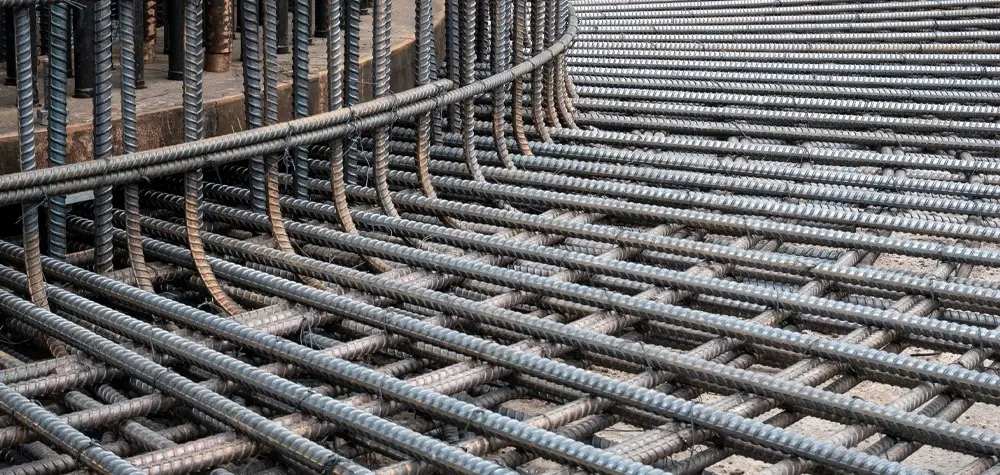
In contemporary construction, steel appears in many forms. Structural steel sections form columns, beams, and trusses. Reinforcing steel works with concrete to handle tensile forces. Stainless steel is used where corrosion resistance and hygiene are critical. Weathering steel is chosen for exposed architectural applications where surface appearance and low maintenance are desired. High strength low alloy steels allow lighter structures without sacrificing performance.
For architecture and construction students, steel should be understood not only as a material, but as an enabler of form, scale, and efficiency. It allows buildings to rise higher, span further, and adapt over time. Despite its ancient origins, steel remains central to modern design, continuing to shape the cities we build and inhabit.
Our Clients


Related Blogs