

Dec 22 • 5 min read
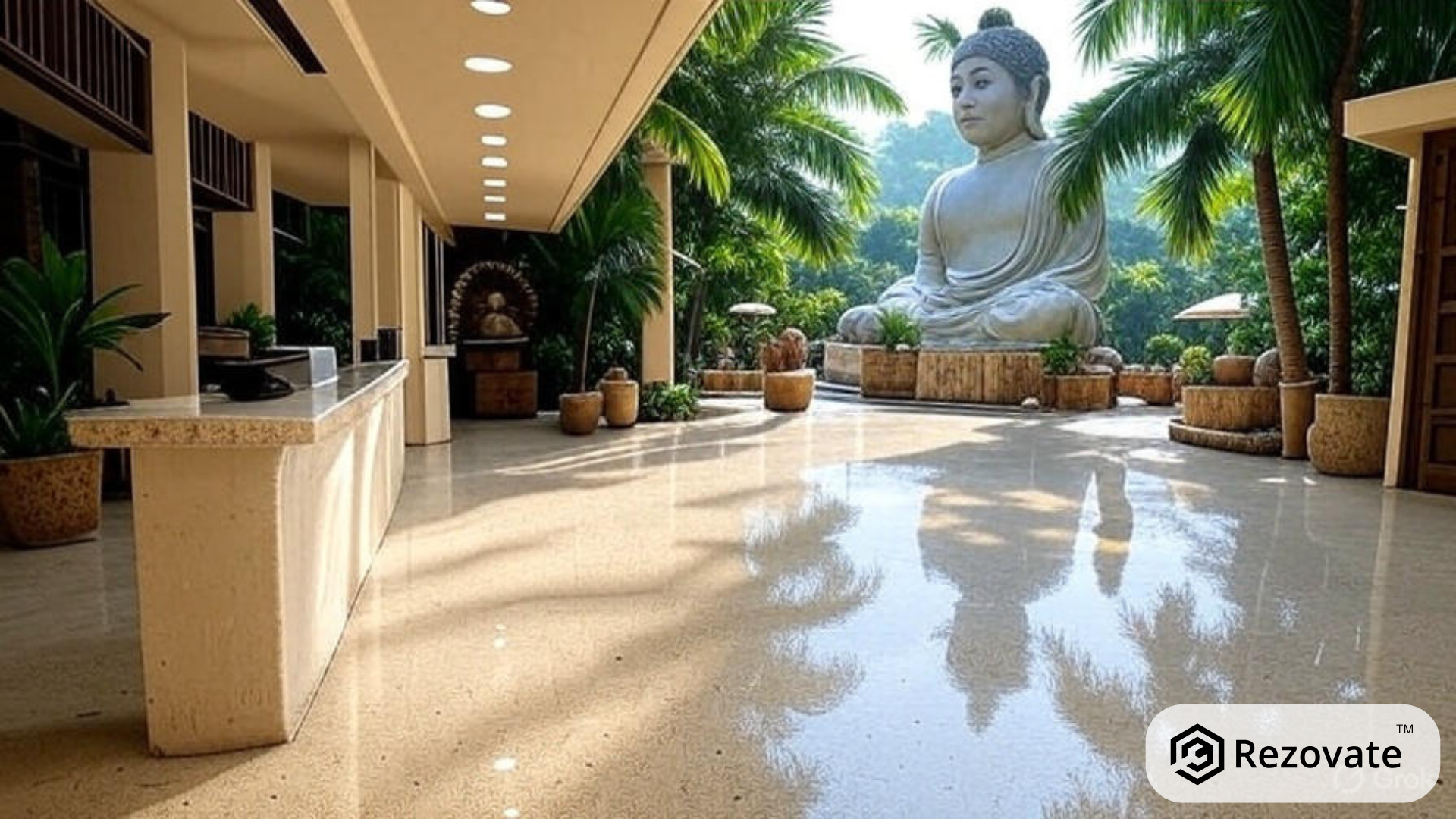
Terrazzo flooring is a stunning and versatile option that has captured the attention of architects, designers, and developers across India and beyond. Known for its seamless, monolithic look and exceptional durability, terrazzo combines functionality with aesthetic appeal, making it a preferred choice for high-end residential, commercial, and public spaces. In this blog, we’ll explore the definition, history, benefits, and drawbacks of terrazzo flooring, with a special focus on its growing popularity in the Indian context, including iconic bungalows in Ahmedabad, luxurious hotels in Udaipur, and other notable examples.
Terrazzo is a composite material used primarily for flooring treatments. It consists of chips of marble, quartz, granite, glass, or other materials embedded in a cementitious binder. The mixture is poured, cured, ground, and polished to create a smooth, seamless surface with a distinctive speckled appearance. Terrazzo can be poured in-situ (on-site) or precast as tiles, offering endless design possibilities through customizable colors, patterns, and aggregates. Its name derives from the Latin word "terra," meaning ground, reflecting its grounded, earthy aesthetic.
The origins of terrazzo can be traced back to ancient Egypt, where early mosaics laid the groundwork for this material. However, modern terrazzo as we know it emerged in 15th-century Italy, when Venetian mosaic workers creatively repurposed marble scraps to create affordable yet elegant flooring for their terraces. This technique, known as pavimento alla Veneziana, evolved over centuries. By the 18th century, terrazzo became a staple in Italian architecture, and its popularity spread to the United States in the late 19th century, where innovations like divider strips and electric grinding machines made it more durable and accessible. In India, terrazzo gained prominence during the Art Deco era of the 1920s and 1930s, adorning heritage buildings and high-end structures, and it continues to thrive today as a modern, sustainable flooring option.
Terrazzo’s enduring appeal lies in its unique combination of practicality and beauty. Here are some of its standout benefits:
Terrazzo’s seamless, joint-free surface creates a sleek, monolithic appearance that enhances the spaciousness of any environment. Whether poured in-situ or installed as precast tiles, terrazzo eliminates grout lines, offering a clean and polished look that complements both modern and traditional Indian architecture. This seamless quality is particularly striking in expansive spaces like commercial buildings, retail spaces, or luxury residences, where uninterrupted designs elevate the aesthetic.
View ideas for terrazzo flooring for commercial spaces here
Terrazzo is exceptionally durable, making it ideal for high-traffic areas like malls, airports, schools, and hotels. Its resistance to cracks, stains, abrasion, and heavy foot traffic ensures it can withstand the rigors of busy environments. In India, terrazzo is a go-to choice for public spaces, lasting up to 75–100 years with proper care.
Sustainability
Terrazzo is an eco-friendly flooring option, aligning with the growing demand for sustainable construction in India. It often incorporates recycled materials such as glass, porcelain, or stone chips, reducing waste. Its longevity minimizes the need for replacements, further reducing resource consumption and contributing to green building certifications like LEED.
Terrazzo’s versatility allows it to blend seamlessly with Indian architectural styles, from minimalist modern designs to ornate traditional structures. Its customizable colors, patterns, and aggregates make it adaptable to various design aesthetics, whether it’s a vibrant, multicolored floor in a contemporary retail space or a subtle, monochromatic design in a heritage building. In India, terrazzo’s ability to stay cool in hot climates adds both aesthetic and functional value, making it a practical choice for diverse applications.
Modern terrazzo is VOC-free, making it a healthier choice for indoor environments. This is especially important in high-end buildings in India, where good air quality is a priority, particularly in urban areas with high pollution levels. By eliminating harmful off-gassing, terrazzo ensures a safer and more comfortable environment for occupants.
While terrazzo offers numerous advantages, it’s not without its challenges:
Improper mixing of terrazzo materials can lead to inconsistent textures, weak bonding, or uneven finishes. Achieving the perfect balance of aggregates, cement, requires skilled craftsmanship. In India, where labor-intensive techniques are common, hiring experienced professionals is crucial to avoid costly mistakes during installation.
To learn how to install terrazzo flooring, visit our step-by-step guide at
https://www.rezovate.com/the-drafting-table
Compared to other flooring options like ceramic or vitrified tiles, traditional cement-based terrazzo requires longer curing times, often 24–48 hours before it can be walked on, and up to a week for full curing.
Terrazzo has a rich history in India, particularly in heritage buildings from the Art Deco era, and its resurgence in modern architecture is notable. Here are some examples of its use in high-end Indian architecture:
In Ahmedabad, terrazzo flooring is a hallmark of heritage bungalows, where its durability and aesthetic versatility shine. For instance, a heritage bungalow in Panchangi,retained its striking maroon-red terrazzo flooring. The bold red, white, and black chips complemented both colonial and modern decor, creating a sophisticated ambiance. Ahmedabad’s hot climate also makes terrazzo a practical choice, as it stays cool underfoot.
Udaipur’s luxury hotels, such as the Taj Lake Palace and Oberoi Udaivilas, have embraced terrazzo for its elegance and durability. The seamless, polished surfaces of terrazzo floors in lobbies and corridors enhance the opulent aesthetic of these properties while withstanding heavy guest traffic. The ability to incorporate intricate designs and vibrant colors aligns perfectly with Rajasthan’s rich architectural heritage, making terrazzo a favorite for high-end hospitality projects.
Wasabi Restaurant, Taj Mahal Palace, Mumbai: This iconic restaurant features terrazzo tiles made with recycled glass, showcasing sustainability and modern design in a high-end setting.
Gaomad Mall, Beijing (Indian Contribution)
Commercial Spaces in Gurgaon: A modern commercial complex in Gurgaon, used terrazzo to create a seamless, luxurious floor that blended contemporary chic with practicality, ideal for upscale urban environments.
Terrazzo flooring is a timeless, sustainable, and versatile choice that continues to captivate architects and developers in India. Its monolithic look, durability for high-traffic areas, eco-friendly composition, and adaptability to Indian architectural styles make it a standout option for heritage bungalows in Ahmedabad, luxury hotels in Udaipur, and other high-end projects. While challenges like proper mixing and longer curing times require skilled installation, the long-term benefits of low maintenance and enduring beauty outweigh the drawbacks. Whether you’re designing a luxury residence, a commercial complex, or a hospitality space, terrazzo offers a perfect blend of style, functionality, and sustainability.
For more information on terrazzo flooring, reach out via our contact page
https://www.rezovate.com/services/terrazzo-flooring


